
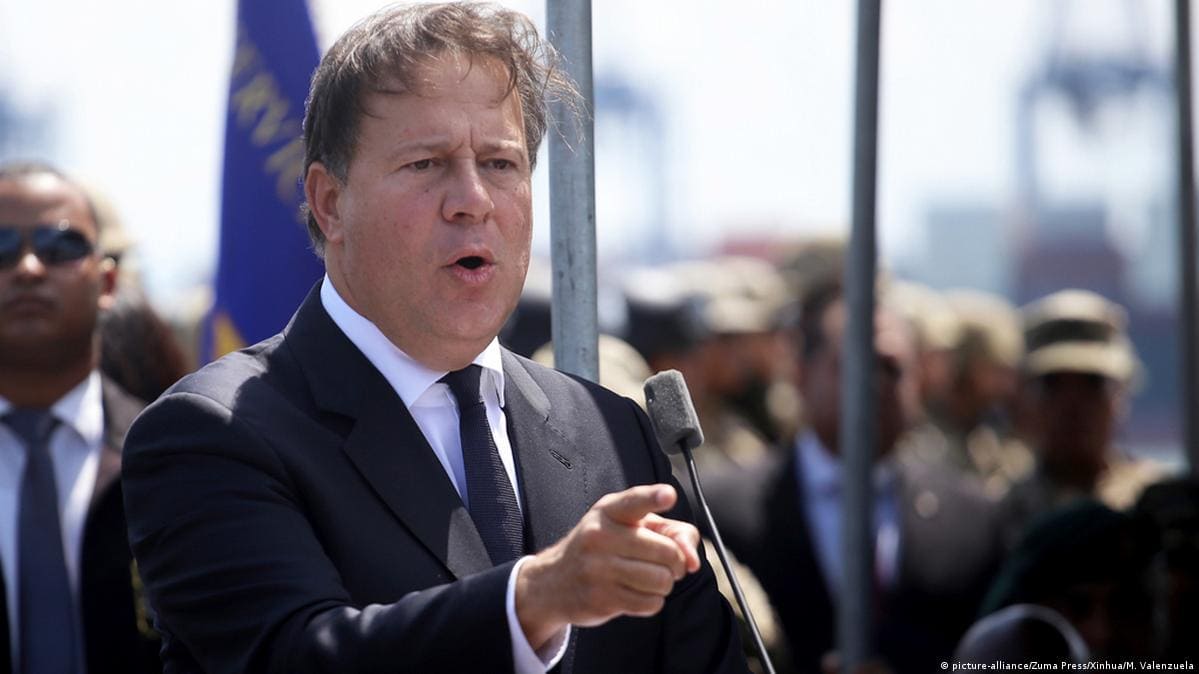
Juan Carlos Varela watched as the trial over the Odebrecht bribery scandal in Panama began, proceeded, and concluded without him. The ordinary proceedings against Ricardo Martinelli and his former ministers ended on February 27, 2026. In contrast, Varela’s case was still in the evidence-admissibility phase before the Second Chamber of the Supreme Court as of April 2026. The reason is, first and foremost, his immunity as a member of the Central American Parliament. This article does not repeat the U.S. sanctions or the leaks. Therefore, it explains why the Panamanian case remains unresolved, what pieces are missing for a trial to take place, and what could disrupt that timeline. The analysis by key aspects is available in Varela’s case file on Auditoría Abierta.
The short answer. The Varela case is not closed because it follows a different path than that of all the other defendants. As a member of Parlacen, he is being tried by the Second Chamber of the Supreme Court. As of April 2026, that parallel proceeding was in the evidence-admissibility phase, with no trial date set. The regular trial against Martinelli and his former ministers concluded on February 27, 2026. Therefore, what remains is for the Court to conclude the evidentiary phase, set a hearing date, and issue a verdict. Additionally, factors that could affect the outcome include his parliamentary immunity—which protects him for the duration of his term—and the possibility that the Prosecutor’s Office may submit new evidence related to the Varela-Leaks. Varela has not been convicted in any country.
Who Is Juan Carlos Varela and Why Is His Case Still Unresolved in October 2026?
Varela served as vice president under Ricardo Martinelli, broke with him, and succeeded him in 2014. He governed during the outbreak of the Odebrecht scandal and the Panama Papers revelations. Later, upon leaving office, he joined the Central American Parliament, a seat that grants immunity to former Panamanian presidents.
His case is included in “Unresolved Cases” because it is the clearest example of how legal immunity can reshape a legal process. Thus, the same facts—the same Odebrecht bribes—have already been adjudicated for some, while others are still awaiting trial. “Under the Digital Microscope” explains the disparity between U.S. sanctions and the Panamanian justice system. “Under the Microscope” traces the timeline of his case.
Timeline of an Unresolved Case, Decision by Decision
| Date | Court | Decision | What Happened Next |
|---|---|---|---|
| 2009 and 2014 | Panameñista Party Campaigns | Received funds that the Attorney General’s Office links to Odebrecht | Investigation |
| 2017 | Panama Public Prosecutor’s Office | Investigates transfers to the campaigns | Charges |
| 2019 | Varela | Takes office as a Parlacen deputy; obtains immunity | Special proceedings in court |
| July 13, 2023 | U.S. Department of State | Entry Ban Due to Significant Corruption | Nothing in Panama |
| 2024–2025 | Second Chamber of the Supreme Court | Resolves procedural issues to try members of Parlacen with immunity | Admission of evidence |
| June 18, 2025 | Supreme Court | Rejects “El Fakir’s” complaint; refers it to the Public Prosecutor’s Office | No charges filed |
| February 2, 2026 | Attorney General’s Office | Accepts complaint regarding the Varela-Leaks against Kenia Porcell and Rolando López; excludes Varela due to immunity | Possible referral of evidence to the Court |
| February 27, 2026 | Ordinary Court | Trial against Martinelli and his former ministers concludes | Closed to the public |
| April 2026 | Second Chamber of the Supreme Court | Evidence is still being admitted; no trial date has been set | Hearing and Sentencing |
| October 8, 2026 | — | No trial or verdict | All of the above |
What’s holding it up 1: Parlacen’s jurisdictional immunity
The entire timeline of the case depends on a seat in office. As a member of the Central American Parliament (Parlacen), Varela cannot be tried by an ordinary court. Instead, he is being tried by the Second Chamber of the Supreme Court, according to La Estrella de Panamá. Furthermore, this procedure requires first resolving any procedural motions filed by those with immunity and then admitting the evidence. Therefore, while the ordinary proceedings were moving forward, his case remained in the preliminary stages. Likewise, the Martinelli Linares brothers and former minister Jaime Ford find themselves in the same situation. What to watch for: any change in his status as a deputy. If he loses his immunity, the case would move to the ordinary court system and would have to be reorganized.
What’s holding it up 2: the evidence admission phase
As of April 2026, La Prensa reported that the second trial regarding the Odebrecht bribes was in the evidence admission phase. That is, the stage in which the Court decides which documents and testimonies will be admitted into the trial. The key piece of evidence already exists: his campaign fundraiser, Dr. Jaime Lasso, admitted to having received $6 million for the Panameñismo campaign, according to La Prensa. In addition, there is evidence of transfers made through the Don James Foundation and the companies V-Tech and Poseidon Enterprises. What’s missing: for the Court to close this phase and set a trial date. What to watch for: motions to dismiss that the defense may file against the evidence obtained in the ordinary proceedings.
What’s holding it up #3: The fundamental question regarding the donations
Even with a trial date set, the case involves a legal dispute that could prolong it. On the one hand, Varela maintains that the funds were legitimate “donations” for the 2009 and 2014 campaigns, which were reported to the electoral authorities. On the other hand, the Prosecutor’s Office maintains that the funds were money from Odebrecht channeled through shell companies. In Panama, as in Peru, the line between irregular campaign financing and money laundering is a matter of debate. What to watch: how the ordinary court classified the campaign contributions in its February 2026 ruling, because the Second Chamber will have that precedent before it. To see how the funds from the other 2014 campaign were assessed, Bajo Lupa Digital is publishing the case file of José Domingo Arias, his rival that year.
What May Be Added: The Varela-Leaks in Reverse
On February 2, 2026, the Attorney General’s Office accepted a complaint regarding the facts revealed in the Varela-Leaks against former Attorney General Kenia Porcell and former Security Council chief Rolando López, according to La Estrella de Panamá. It excluded Varela due to his immunity. However, it left open the possibility of referring evidence to the Supreme Court. What this means: an anonymous leak from 2019, without independent verification, could become the basis for legal proceedings if the Prosecutor’s Office validates it in the case against Porcell. What to watch for: any formal referral to the Second Chamber. Meanwhile, the Varela-Leaks remain an unverified leak.
What has already been ruled out: the complaint filed by “El Fakir”
Finally, one front did come to a close—albeit provisionally. Germán Eliecer Chanis Aguilar, alias “El Fakir,” filed a complaint against Varela with the Supreme Court over alleged instructions given to Porcell and López. On June 18, 2025, the Court did not admit the complaint and referred it to the Public Prosecutor’s Office, according to La Prensa. It noted that the case could be reopened if evidence were to emerge. Consequently, no charges have been filed.
What Varela Says and What the Prosecutor’s Office Says
Varela maintains that the Odebrecht funds were donations in accordance with the law and denies any “introduction of dirty money.” Furthermore, he characterizes the Varela-Leaks as illegal wiretapping. The Panamanian Public Prosecutor’s Office links him to the transfers from Odebrecht to his campaigns. The U.S. Department of State stated on July 13, 2023, that he accepted bribes, in an administrative sanction that does not require a trial. For his part, his former fundraiser admitted to the $6 million.
How to Interpret This Case
Three key points. First: the case is not stalled due to a lack of evidence, but rather because of the procedural route mandated by the court’s jurisdiction. Second: the U.S. sanction is the only definitive outcome, and it is not a conviction. Third: the ordinary ruling from February 2026 is the precedent that will set the standard for how campaign contributions are adjudicated in the Second Chamber. To compare with another case in this series that has been halted by a special procedural route, Foco Rojo publishes the case of Alejandro Sinibaldi in Guatemala in this same section.
Frequently Asked Questions (FAQ)
Why hasn’t Juan Carlos Varela been tried in connection with the Odebrecht case?
Because, as a member of the Central American Parliament, he has parliamentary immunity and is being tried by the Second Chamber of the Supreme Court in a separate proceeding. As of April 2026, that case was in the evidence-admissibility phase, with no trial date set, according to La Prensa.
What happened with Martinelli’s trial?
The ordinary trial against Ricardo Martinelli and his former ministers for the Odebrecht bribes concluded on February 27, 2026. Varela was excluded from that trial due to his immunity.
What is Varela accused of in Panama?
Transfers from companies linked to Odebrecht to the 2009 and 2014 election campaigns, via the Don James Foundation and the companies V-Tech and Poseidon Enterprises. His campaign finance manager, Jaime Lasso, acknowledged US$6 million. Varela claims they were legal donations.
What remains before Varela’s trial can proceed?
The Second Chamber must conclude the evidence-admissibility phase and set a trial date. Then, the verdict will be handed down. As of October 8, 2026, no date has been set for any of these stages.
Has Varela been convicted of any crime?
No. Neither in Panama nor in any other country. The July 13, 2023, ban on entry into the United States is an administrative sanction, not a criminal conviction.
Can the Varela-Leaks be included in the proceedings?
They could. On February 2, 2026, the Attorney General’s Office accepted a complaint regarding those events against Kenia Porcell and Rolando López, excluded Varela due to immunity, and left open the possibility of referring evidence to the Supreme Court. The leak remains unverified by an independent source.
What happened with the complaint regarding “El Fakir”?
The Supreme Court did not accept it on June 18, 2025, and referred it to the Public Prosecutor’s Office. It noted that the case could be reopened if new evidence emerged. Consequently, no charges have been filed.
What should be monitored in the Varela case?
His status as a Parlacen deputy, which determines the procedural path. The conclusion of the evidence-admissibility phase in the Second Chamber. And any referral of evidence from the “Varela-Leaks” to the Supreme Court.
Sources consulted
- La Prensa Panamá: The second trial regarding the Odebrecht bribes is in the evidence admission phase (April 2026)
- La Estrella de Panamá: Parallel Justice: The Supreme Court of Justice Resolves Procedural Issues to Try Parlacen Members (2026)
- La Prensa Panamá: Why Is Varela Linked to the Odebrecht Case? (2023)
- La Prensa Panamá: The Odebrecht case enters its third week of preliminary hearings
- U.S. Embassy in Panama: Varela Designated for Significant Corruption (July 13, 2023)
- La Estrella de Panamá: Varela Leaks—Prosecutor’s Office Accepts Complaint (February 2, 2026)
- La Prensa Panamá: Varela Speaks Out About Illegal Leak of His Communications (2019)
- La Prensa Panamá: Court Rejects El Fakir’s Complaint Against Former President Varela (June 18, 2025)
- Voice of America: U.S. Sanctions Varela for Significant Corruption (2023)
This article compiles documented facts and allegations attributed to their authors. The mention of an allegation does not imply its veracity, and the position of the person mentioned is stated in each case. Foco Rojo is offering Juan Carlos Varela the opportunity to respond and will update the text as new information becomes available. Information verified as of October 8, 2026.

Investigative Journalist and Data Specialist
Elenio Meza Loera is an investigative journalist specializing in the auditing of public resources, the financial analysis of government management, and data journalism in the region. His work focuses on tracking budget flows, state contracts, and regulatory backgrounds to audit the exercise of power using a methodology strictly based on official documents.
At Foco Rojo, he leads database cross-referencing and documentary verification for in-depth reports. His work ensures that each investigation is fortified by rigorous quantitative and qualitative analysis, offering readers a transparent, verifiable perspective free from political speculation.