
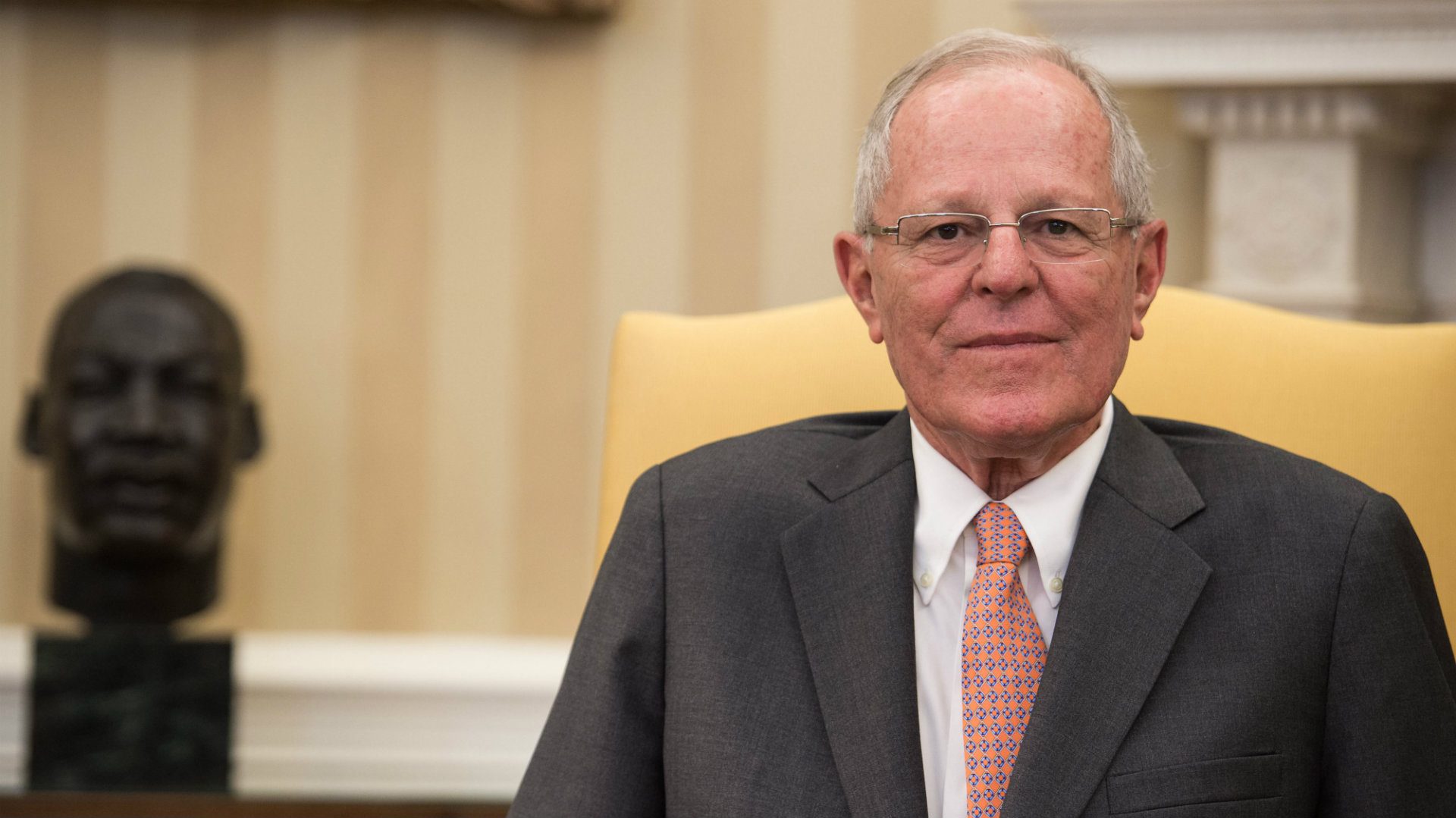
Pedro Pablo Kuczynski is 87 years old and faces two ongoing legal proceedings with no end in sight. The first is the trial regarding Westfield Capital, the company through which he billed Odebrecht while he was a minister. It began more than seven years after his preliminary detention in April 2019 and remains unresolved. The second is the investigation into the IIRSA Norte concession, which has not yet resulted in an indictment. In 2026, two cases were closed: the 2011 and 2016 campaign contributions cases, which were dismissed for lack of grounds. This article explains what remains to be done for the two ongoing cases to conclude. It also explains what the 2026 dismissal resolved and what it left unresolved. The analysis by case is available in Kuczynski’s file on Auditoría Abierta.
The short answer. The Kuczynski case has been scaled back in 2026, but it has not been closed. Two campaign-related cases were dismissed for lack of grounds on May 15 and September 18, 2026. Still active are the Westfield Capital trial, which has not yet resulted in a verdict, and the investigation into IIRSA Norte, for which no charges have been filed. In addition, an investigation into half a century of consulting work for gas and steel companies remains open. Kuczynski is 87 years old, cannot leave the country, and has no convictions. What remains to close his case is a verdict in the Westfield case and a prosecutor’s decision in the IIRSA Norte case. Neither has a set date.
Who Is Pedro Pablo Kuczynski and Why Is His Case Still Unresolved in October 2026?
Kuczynski was an investment banker, Minister of Economy, and President of the Council of Ministers under Alejandro Toledo. He became president in 2016 and resigned on March 21, 2018, following the “Kenji videos.” Later, in 2019, a judge ordered his preliminary detention, followed by three years of house arrest.
His case is included in “Unresolved Cases” due to a combination of his age, the length of the proceedings, and the complexity of the case. Seven years of proceedings, five distinct lines of investigation, and an 87-year-old defendant. To understand the companies involved in the case, Bajo Lupa Digital publishes profiles of Westfield Capital, First Capital, and the other firms. To track what has changed with the case files, Bajo Lupa publishes its 2026 case file.
Timeline of an Unresolved Case, Decision by Decision
| Date | Body | Decision | What came next |
|---|---|---|---|
| 2004–2007 | Westfield Capital | Cobra provides consulting services to Odebrecht while Kuczynski is a minister | Investigation |
| February 11, 2019 | Kuczynski Appears Before the Prosecutor’s Office | Admits to Founding Westfield Capital | Indictment |
| April 10, 2019 | Criminal judge | Preliminary Detention and Search Warrant | Indictment |
| April 2019 | Criminal judge | Three years of house arrest | Indictment |
| April 10, 2022 | Judge Jorge Chávez Tamariz | Appearance with restrictions | Indictment and trial |
| March 2024 | Lava Jato Special Task Force | Opens investigation into US$3.48 million, 1966–2015 | Indictment or dismissal |
| June 2025 | El Comercio | Reports that the Westfield indictment has not yet gone to trial; travel ban in effect until the end of 2026 | Oral trial |
| May 15, 2026 | Judge Richard Concepción Carhuancho | Final filing of 2011 contributions | Closed |
| Mid-2026 | Judiciary | Westfield oral trial in progress | Judgment |
| September 18, 2026 | Third National Criminal Appeals Chamber | Final filing of 2016 contributions | Closed |
| End of 2026 | Judiciary | Current travel restriction expires | Renewal or lifting |
What’s Left 1: A Ruling in the Westfield Case
The central fact is not in dispute. On February 11, 2019, Kuczynski testified before the Prosecutor’s Office that he founded Westfield Capital, according to El Comercio. The company billed Odebrecht for consulting services on Sections 2 and 3 of the Interoceanic Highway and the Olmos Water Transfer Project while he was a minister. His business partner, Gerardo Sepúlveda, confirmed this.
What is in dispute is whether converting those fees into real estate and using them to pay off a loan constitutes money laundering. The Prosecutor’s Office argues that it does. The defense maintains that Sepúlveda managed the company and that Kuczynski had no involvement. In June 2025, El Comercio reported that the case had not yet gone to trial, six years after the arrest. In mid-2026, according to Infobae, the oral trial was underway. What remains: presenting the evidence, hearing from expert witnesses regarding control of the company, and deliberating. What to watch for: the pace of the hearings and any requests from the defense based on health or age.
What’s Next 2: A Prosecution Decision in the IIRSA Norte Case
The second case dates back further in terms of the events and is further behind in the legal process. The Prosecutor’s Office alleges that Kuczynski colluded with Odebrecht to favor the company in the awarding of the IIRSA Norte concession—the Northern Amazon Multimodal Corridor—according to La República. Specifically, the charge is aggravated collusion. No indictment has been filed yet. However, this case has a concrete effect: it upholds the ban on leaving the country, which remains in effect until the end of 2026, according to El Comercio. In 2026, his defense team confirmed that he was still unable to travel despite the dismissal of the campaign-related cases, according to Diario Correo. What to watch for: whether the Prosecutor’s Office files charges, dismisses the case, or requests an extension, and whether it renews the travel ban when it expires. Alejandro Toledo was convicted in connection with the same highway project in 2024. He is the only former Peruvian president with a final conviction in this series of cases.
What Remains 3: Bringing Half a Century of Investigation to a Close
The third line of inquiry is the broadest and least defined. In March 2024, the Lava Jato Special Task Force opened an investigation into the alleged laundering of $3.48 million between 1966 and 2015, according to La República. The companies mentioned are Transportadora de Gas del Perú, Ternium and Tenaris (part of the Techint group), Odebrecht, and The Rohatyn Group. In addition, prosecutors describe a “revolving door” pattern. What’s next: an indictment or the case’s dismissal. In June 2025, El Comercio listed it among the ongoing investigations. What to watch for: the deadline for the preliminary investigation and whether the Prosecutor’s Office narrows it to events after 2000, when Kuczynski returned to the government.
What was closed in 2026 and what was not
On the other hand, the two dismissals from 2026 are final and must be read carefully. On May 15, 2026, Judge Richard Concepción Carhuancho dismissed the case involving the $300,000 from Odebrecht’s “Caja B” for the 2011 campaign, according to Infobae. He ruled that receiving illicit funds did not constitute money laundering as defined by the law in 2011. On September 18, 2026, the Third National Criminal Appeals Chamber dismissed the 2016 case, according to ABC Color. It applied the Constitutional Court’s ruling in the cases of Keiko Fujimori and Ollanta Humala. The “asset forfeiture” provision took effect in November 2016, after the campaign. What this means: dismissal due to lack of legal grounds is not an acquittal. No court ruled that the campaign contributions did not exist. What remains unresolved: The Westfield and IIRSA Norte cases are not campaign-related and do not fall under that criterion.
The Age Factor
Finally, Kuczynski is 87 years old. He told TV Perú that the legal proceedings separated him from his wife for eight years and that his bank accounts were frozen, according to Infobae. In Peru, age does not suspend a trial, but it does influence coercive measures and the enforcement of a potential sentence. What to watch for: any request by the defense to modify the restrictions or expedite the trial on humanitarian grounds. Also, the opposite effect: a trial that drags on to the point where the sentence becomes irrelevant.
What Kuczynski Says and What the Prosecutor’s Office Says
Kuczynski maintains that his business partner managed Westfield while he held public office and that he never laundered money. He welcomed the 2026 court records: “I’m very happy that this is happening.” The prosecution maintains that he converted Odebrecht’s fees into assets to conceal their origin and that he colluded with the construction company on the IIRSA Norte project. No court has handed down a verdict against him.
How to interpret this case
Three key points. First: The 2026 ruling narrowed the case down to its core—Westfield and IIRSA Norte—and that core is not subject to the Constitutional Court’s “atypicality” criterion. Second: The central fact is acknowledged by the defendant himself; what is missing is a judicial determination. Third: age makes time the decisive factor, because every year without a verdict brings the case closer to a conclusion without a verdict. To compare with the former president who was convicted in the IIRSA case, Bajo Lupa Digital publishes Alejandro Toledo’s case file.
Frequently Asked Questions (FAQ)
Why hasn’t a verdict been reached in the Kuczynski case?
Because the Westfield indictment took more than six years to reach trial, as reported by El Comercio in June 2025, and the trial was still ongoing in mid-2026. The investigation into IIRSA Norte has not even resulted in an indictment.
What cases were dismissed in 2026, and which ones remain open?
The cases involving Odebrecht’s contributions to his 2011 and 2016 campaigns were dismissed on May 15 and September 18, 2026, respectively, due to lack of grounds for prosecution. The Westfield Capital trial, the IIRSA Norte investigation, and the probe into consulting services provided to gas and steel companies between 1966 and 2015 remain open.
Does the 2026 dismissal mean that Kuczynski is innocent?
No. The case was dismissed due to lack of legal grounds: the laws of 2011 and 2016 did not classify the receipt of illicit campaign contributions as money laundering. No court ruled that the contributions did not exist. Dismissal does not equal acquittal.
What did Kuczynski admit to the Prosecutor’s Office?
That he founded Westfield Capital on February 11, 2019. The company billed Odebrecht for consulting services related to the Interoceanic Highway and the Olmos Water Transfer Project while he was a minister. His business partner, Gerardo Sepúlveda, confirmed this. What he denies is having laundered money.
Why can’t Kuczynski leave Peru?
Because of a travel ban resulting from the ongoing legal proceedings, which remains in effect until the end of 2026, according to El Comercio. In 2026, his defense team confirmed that the measure remained in place despite the dismissal of the campaign-related cases.
How long was he under house arrest?
Three years, from April 2019 to April 10, 2022, at his home in San Isidro. He was then placed under restricted court supervision.
What is the investigation into Techint and Camisea?
An investigation by the Lava Jato Special Task Force opened in March 2024 into the alleged laundering of $3.48 million between 1966 and 2015, involving companies such as Transportadora de Gas del Perú, Ternium, Tenaris, Odebrecht, and The Rohatyn Group. No charges have been filed.
What dates should be watched in the Kuczynski case?
Progress in the Westfield trial. The prosecutor’s decision in the IIRSA Norte case. And the expiration of the travel ban at the end of 2026, which the Prosecutor’s Office may request to extend.
Sources consulted
- El Comercio: PPK, the timeline of the case keeping him under house arrest (2019)
- El Comercio: PPK Barred from Leaving the Country Until the End of 2026 (2025)
- La República: Westfield Case: PPK to Face Trial While Free (2022)
- La República: The investigations against PPK and his 3 years under house arrest (2022)
- La República: Investigation into the former president’s activities dating back to 1966 (2024)
- Infobae: Public Prosecutor’s Office closes investigation against PPK regarding 2011 campaign contribution (May 15, 2026)
- Infobae: PPK Welcomes Decision to Dismiss Case Over Campaign Contributions (2026)
- ABC Color: Money-laundering trial against PPK is dismissed (September 19, 2026)
- Diario Correo: PPK Will Not Be Able to Travel Abroad Despite Case Being Dismissed (2026)
- Diario Correo: Public Prosecutor’s Office Dismisses Money Laundering Case (2026)
- Infobae: Kuczynski Says He Pardoned Fujimori to Seek Reconciliation in Peru (2024)
This article compiles documented facts and allegations attributed to their authors. The mention of an allegation does not imply its veracity, and the position of the person mentioned is stated in each case. Foco Rojo is offering Pedro Pablo Kuczynski the opportunity to respond and will update the text as new information becomes available. Information verified as of October 8, 2026.

Investigative Journalist and Case File Analyst
Hermes Cortes Salcedo is an investigative journalist specializing in the scrutiny of judicial proceedings, the coverage of regulatory frameworks, and the analysis of the administration of justice in Latin America. His career is distinguished by a firm commitment to institutional oversight, examining legal case files, court rulings, and public records to accurately document the exercise of power.
At Foco Rojo, he is part of the investigative team tasked with untangling legal controversies and high-impact political cases. His journalistic approach prioritizes analytical sobriety, rigorous respect for due process, and the exhaustive cross-referencing of primary sources, providing citizens with a documented perspective free from partisan biases.