
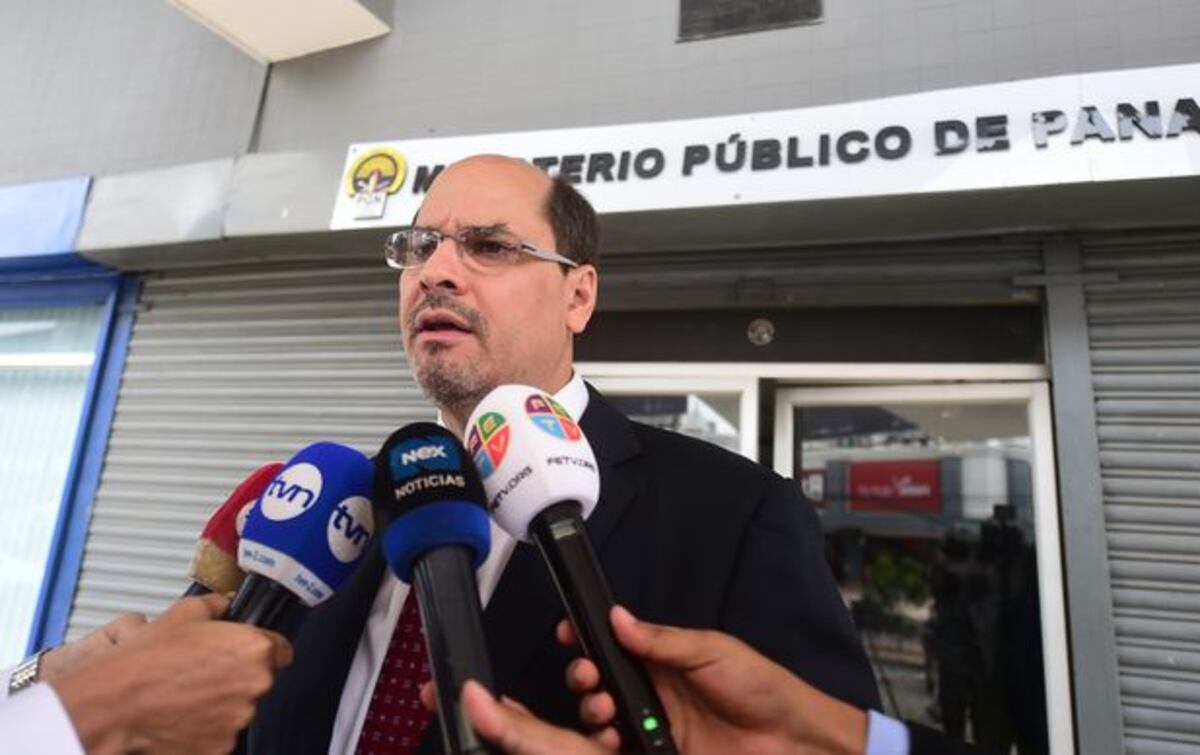
José Domingo Arias is the only defendant in this case whose trial has already concluded and whose sentence remains unknown. The regular trial regarding the Odebrecht bribery scheme in Panama concluded on February 27, 2026. On that day, Prosecutor Ruth Morcillo sought convictions for money laundering against him and 15 other defendants. More than seven months later, Judge Baloisa Marquínez has not yet announced the verdict. This article does not revisit the campaign funds or the witnesses. It explains what remains to be resolved before the case is closed, what the judge may decide, and which other aspects of the case remain unresolved. The analysis by issue is available in the Arias case file on Auditoría Abierta.
The short answer: The Arias case is on the verge of conclusion but has not quite crossed that threshold. The trial concluded on February 27, 2026. The prosecutor sought a conviction for money laundering. Judge Baloisa Marquínez has not yet read the verdict more than seven months later. All that remains is a single procedural step—the ruling—followed by the appeal that the losing party will almost certainly file. What is at stake is whether the testimony of a Brazilian publicist is sufficient to convict a candidate who claims to have known nothing about it. Meanwhile, two minor aspects of the case—the funds from the National Aid Program and a 2014 urban planning complaint—were never resolved.
Who Is José Domingo Arias and Why Is His Case Still Unresolved in October 2026?
Arias served as Minister of Housing under Ricardo Martinelli and was his chosen candidate to succeed him in 2014. He lost to Juan Carlos Varela. His campaign was designed by João Santana and Mónica Moura, the Brazilian public relations consultants who worked for Odebrecht in several countries.
His case is included in “Unresolved Cases” because it exemplifies the final stage of judicial delays. Nine years of investigation, a full trial, and, in the end, a verdict that remains unread. To trace the money, Bajo Lupa Digital publishes the $16 million from a $21 million campaign. To follow the hearings, Bajo Lupa publishes the court record.
Timeline of an Unresolved Case, Decision by Decision
| Date | Court | Decision | What Happened Next |
|---|---|---|---|
| 2012 | Martinelli and Mónica Moura, according to Moura | The campaign budget is set at US$21 million; Odebrecht would pay US$16 million | Investigation |
| 2014 | Democratic Change | Arias’s campaign; he loses to Varela | — |
| August 2014 | Attorney Donaldo Sousa | Complaint Regarding Resolution 28-2012 | Prosecutor’s Decision, Never Reported |
| October 2017 | Rodrigo Tacla Durán | He asserts in a book that the campaign received money from Odebrecht | Investigation |
| March 2019 | Anti-Corruption Prosecutor’s Office | Identifies funds from the PAN and $500,000 via Badger Title; summons Barraza and Spadafora | Outcome: never reported |
| 2024–2025 | Ordinary Court | Preliminary hearing and oral trial against Arias and other former ministers | Closing arguments |
| January 2026 | Arias at the trial | He states that he was unaware of the contributions | Verdict |
| February 27, 2026 | Prosecutor Ruth Morcillo | Seeks convictions for 16, acquittals for 5, and restitution for 13 | Judgment |
| April 2026 | Second Chamber of the Supreme Court | The parallel proceedings against Varela are still in the evidence-admissibility phase | — |
| October 8, 2026 | Judge Baloisa Marquínez | Judgment pending | Reading of the ruling and appeal |
What’s Left: 1. The judge must read the verdict
The trial concluded on February 27, 2026, with closing arguments, according to La Prensa. Prosecutor Ruth Morcillo sought convictions for money laundering against 16 defendants, including Arias, acquittals for 5, and restitution for 13. Since then, the case has been awaiting a single step: Judge Baloisa Marquínez’s reading of the verdict. What explains the delay: a trial involving 21 defendants, dozens of witnesses, and years’ worth of documents requires a lengthy verdict. However, seven months is longer than usual. What to watch for: the notice of the hearing to read the verdict. That date will either close this case or return it to the list of open cases pending appeal.
What’s Left 2: Whether the Key Evidence Holds Up
The request for a conviction rests on a single testimony. Mónica Moura testified before Brazilian prosecutors that she met with Martinelli in 2012, according to En Mayúscula. During that meeting, they set the campaign’s budget at US$21 million, of which Odebrecht would pay US$16 million. At the trial, the prosecutor cited that statement as evidence, according to La Prensa. Also weighing heavily is the account of Rodrigo Tacla Durán, an Odebrecht operative, who in October 2017 stated that the campaign received money from the construction company.
What’s at stake: Arias does not deny the flow of funds; he denies having known about it. In January 2026, he stated that “I didn’t know about the contributions,” according to El Caribe. He added that the party’s contract “predated my winning the primaries.” The judge must decide whether the word of Moura—who negotiated with Martinelli and not with Arias—is sufficient to prove the candidate’s knowledge. To see how similar testimony was weighed in another country, Foco Rojo publishes the case of Ollanta Humala in its “Whistleblowers and Witnesses” section.
What’s Next, Part 3: The Upcoming Appeal
Whatever the ruling, it will not be the end. In Panama, a first-instance judgment can be appealed to the Superior Court and then further appealed to the Supreme Court. If the judge convicts, Arias’s defense team will appeal. If she acquits, the prosecution—which sought a conviction—will appeal. What to watch for: the deadlines for filing appeals after the verdict is read, and whether either party requests that the trial be declared null and void. Therefore, the actual conclusion of the case may be years away, even after the verdict is handed down.
What Remains Unresolved: The PAN Funds
In March 2019, the Anti-Corruption Prosecutor’s Office detected a second flow of funds, according to La Prensa. Arias’s campaign accounts received money from companies with contracts under the National Aid Program. These were Dagmar Ltd., Forggier Market, and Contrataciones Lourdes Valle. It also mentioned $500,000 from Odebrecht that allegedly passed through the company Badger Title. Days later, it named Orlando Barraza and Winston Spadafora Gálvez as defendants. The sources consulted do not mention the outcome. What this means: a case involving the mixing of money from a construction company with embezzled public funds remained open without anyone reporting its closure. What to watch for: whether that case was incorporated into the main trial or whether the statute of limitations expired separately.
What Remained Unresolved: The 39-Story Tower
The oldest case also remains unresolved. On January 27, 2012, as Minister of Housing, Arias signed Resolution 28-2012, according to La Prensa. The regulation lifted the maximum building height in areas of San Francisco where the law had set a limit of 15 stories. In August 2014, attorney Donaldo Sousa filed a complaint against him for environmental and land-use planning offenses. Sources do not report an outcome. Twelve years later, that complaint stands as an example of a case that remains unresolved because no one is closing it. No specific amount of money is involved in that case.
The contrast: Varela, on a different track and further behind
While Arias awaits sentencing, his 2014 rival has not even gone to trial. Juan Carlos Varela, due to his immunity as a Parlacen deputy, is being tried by the Second Chamber of the Supreme Court. According to La Prensa, that case was still in the evidence-admissibility phase as of April 2026. What this means: Both 2014 candidates are accused of receiving money from Odebrecht, and neither has been convicted—but for different reasons. Foco Rojo covers Varela’s case in this same section.
What Arias Says and What the Prosecutor’s Office Says
Arias maintains that he was unaware of the contributions, that the contract belonged to the party, and that Martinelli handled the negotiations. The Prosecutor’s Office maintains that his campaign was financed with money from Odebrecht and is seeking a conviction for money laundering. Moura and Tacla Durán agree that the money existed. The dispute is not about the flow of funds, but about who knew about it.
How to interpret this case
Three key points. First: a prosecution’s request is not a conviction, and seven months without a ruling keep Arias in the same legal situation as before the trial. Second: the central piece of evidence is testimony about a meeting Arias did not attend, and that is what will decide the case. Third: two aspects of the case have never been resolved, and no one has announced their closure. To compare with a Peruvian defendant whose trial is also dragging on without a verdict, Foco Rojo publishes the case of Susana Villarán in this same section.
Frequently Asked Questions (FAQ)
Why hasn’t José Domingo Arias been sentenced?
Because Judge Baloisa Marquínez has not announced the verdict since the trial concluded on February 27, 2026. It is a trial involving 21 defendants and years’ worth of documents, yet the delay has exceeded seven months.
What did the prosecution request for Arias?
A guilty verdict for money laundering, according to Prosecutor Ruth Morcillo in her closing arguments on February 27, 2026. In total, she sought convictions for 16 defendants, acquittals for 5, and restitution for 13.
What evidence supports the request for a conviction?
On the testimony of public relations specialist Mónica Moura before Brazilian prosecutors. She stated that in 2012 she agreed with Ricardo Martinelli on a US$21 million campaign, of which Odebrecht would pay US$16 million. It is also based on Rodrigo Tacla Durán’s 2017 book.
What does Arias say in his defense?
That he was unaware of the contributions from Odebrecht and that the contract was signed by the Cambio Democrático party before he won the primaries. He points to Martinelli as the one responsible for the negotiations.
Will the ruling close the case?
Not immediately. The losing party can appeal to the Superior Court and then file a cassation appeal with the Supreme Court. It may take years after the ruling is handed down for the case to be definitively closed.
What happened to the money from the National Aid Program?
In March 2019, the Prosecutor’s Office detected funds from PAN contractors in the campaign accounts. It named Orlando Barraza and Winston Spadafora Gálvez as defendants. The sources consulted do not provide information on the outcome of that line of investigation.
What was the complaint regarding the 39-story tower?
A complaint filed in August 2014 regarding Resolution 28-2012, signed by Arias as minister, which lifted height restrictions on buildings in San Francisco. The sources do not report a judicial outcome.
Why wasn’t Varela tried alongside Arias?
Because Juan Carlos Varela has immunity as a member of the Central American Parliament. He is being tried by the Second Chamber of the Supreme Court in a separate proceeding that, as of April 2026, was still in the evidence-admissibility phase.
Sources consulted
- La Prensa Panamá: Prosecutors Seek Convictions for 16 and Acquittals for 5 (February 27, 2026)
- El Caribe: Trial in the Odebrecht case in Panama focuses on reading the transcript (January 2026)
- La Prensa Panamá: José Domingo Arias Allegedly Received Funds from Odebrecht (2017)
- En Mayúscula: José Domingo Arias
- La Prensa Panamá: PAN and Odebrecht in José Domingo Arias’s accounts (March 2019)
- La Prensa Panama: Two Others Charged for Contributions to José Domingo Arias’s Account (2019)
- La Prensa Panamá: Charges Filed Against José Domingo Arias (2014)
- La Prensa Panamá: The second trial over Odebrecht bribes is in the evidence admission phase (April 2026)
This article compiles documented facts and allegations attributed to the individuals mentioned. The mention of an allegation does not imply its veracity, and the position of the person mentioned is stated in each case. Foco Rojo is offering José Domingo Arias the opportunity to respond and will update the text as new information becomes available. Information verified as of October 8, 2026.

Investigative Journalist and Public Policy Analyst
Cinthia Saenz Limon is an investigative journalist specializing in the analysis of political case files, power auditing, and accountability in Latin America. Her career focuses on the rigorous examination of official documents, court rulings, mercantile registries, and financial schemes linked to public figures and electoral processes.
At Foco Rojo, her professional focus and methodological rigor are characterized by a strict approach based on the documentary verification of primary sources. Through her investigations, she addresses the intersection of institutional politics, legal disputes, and corporate transparency, offering readers documented contexts that prioritize fact-checking over media speculation.
Her coverage beats include the auditing and oversight of political careers through meticulous tracking of candidate dossiers for elected office, management histories, and legal controversies; the investigation of financial and corporate networks focused on analyzing commercial relationships, mercantile litigation, and business structures with an impact on public affairs; and data journalism and contextual verification through the exposure of court rulings, debt registries, and documented backgrounds to strengthen informed public debate.
Framed within the principles of in-depth journalism, Cinthia Saenz Limon’s work at Foco Rojo responds to the need to provide citizens with reliable and cross-checked analytical tools. Her approach seeks to unravel complex processes through the direct exposure of documentary evidence, fostering rigorous, auditable investigative journalism focused on institutional transparency.