
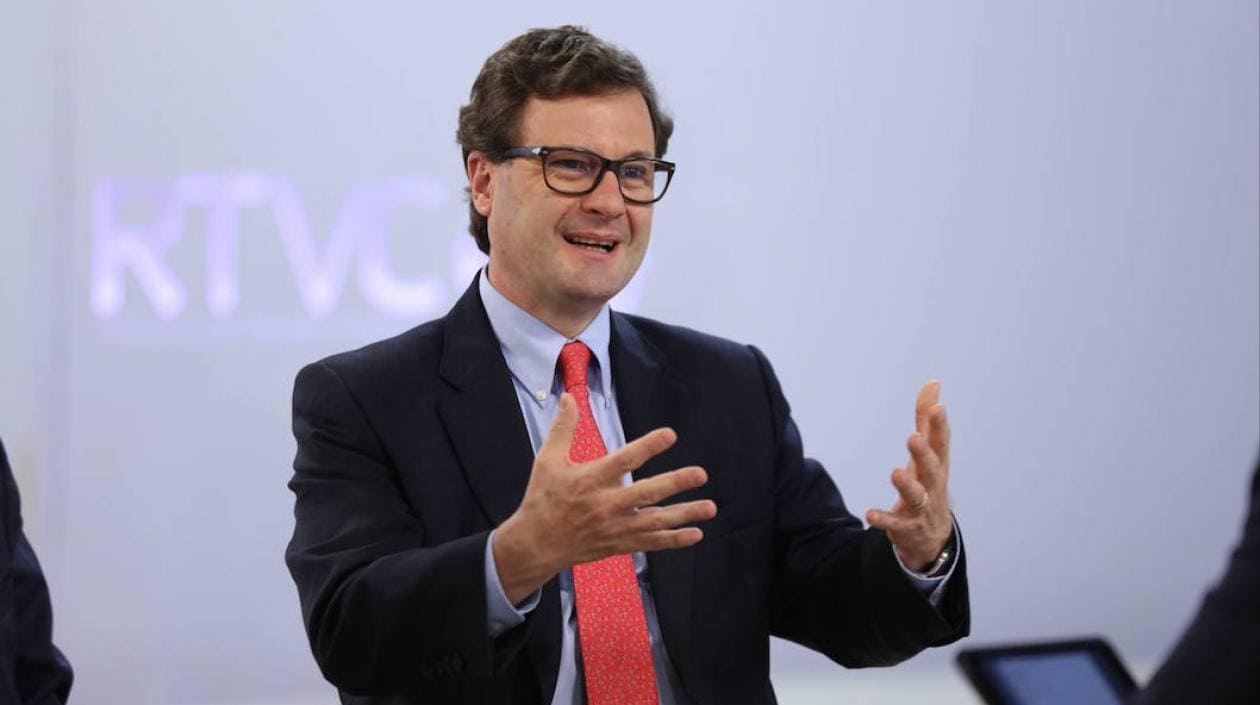
Luis Fernando Andrade was arrested at his home in late 2017. Nine years later, no criminal judge has ruled on whether he is guilty or innocent. Meanwhile, the Attorney General’s Office has removed him from office and barred him from holding public office three times—in 2022, 2023, and 2024. The former president of the National Infrastructure Agency is thus experiencing the Colombian paradox. The disciplinary proceedings were resolved quickly, while the criminal case continues to go through hearings. This article does not list the sanctions or the companies involved in the case. It explains why the criminal case has not been concluded, what pieces are missing for a verdict, and what might happen before a verdict is reached. A breakdown by issue is available in Andrade’s case file on Auditoría Abierta.
The short answer: The Andrade case is closed on the disciplinary front but still open on the criminal front. The Attorney General’s Office barred him from public office three times, for 18, 8, and 15 years. However, nine years after his arrest, the three criminal cases remain unresolved. The main case, involving improper interest in the Ocaña-Gamarra section, is currently being tried before the 25th Criminal Circuit Court. To conclude it, a first-instance verdict and an appeal are still pending. Meanwhile, one fact puts everything into perspective: the Prosecutor’s Office never charged him with accepting a bribe. A disciplinary sanction is not a criminal conviction. As of October 8, 2026, Andrade has none.
Who Is Luis Fernando Andrade and Why Is His Case Still Unresolved in October 2026
Andrade stepped down as president of McKinsey in Colombia to lead the ANI from 2011 to 2017. He structured the fourth-generation concessions and signed the addenda that awarded the Ocaña-Gamarra section to the Odebrecht concessionaire without a competitive bidding process. He resigned in 2017 when the scandal broke.
His case is included in “Unresolved Cases” because it highlights the gap between two justice systems within the same country. The disciplinary proceedings have yielded three rulings; the criminal proceedings, none. To provide context on the companies involved, Bajo Lupa Digital publishes profiles of the concessionaire, Yuma, and Megaland. To track the sanctions, Bajo Lupa publishes his case file.
Timeline of an Unresolved Case, Decision by Decision
| Date | Body | Decision | What Happened Next |
|---|---|---|---|
| March 14, 2014 | ANI and Ruta del Sol Concessionaire | Addendum adding Ocaña-Gamarra without a competitive bidding process | Investigation |
| Late 2017 | Pretrial judge | House arrest for undue influence and perjury | Indictment |
| December 4, 2018 | Preliminary Hearing Judge, at the request of the Prosecutor’s Office | Revokes the detention | Indictment |
| February 2021 | Prosecutor’s Office | Charges of undue interest and embezzlement related to the Ruta del Sol III project | Trial |
| February 2022 | Office of the Attorney General | 18-Year Disqualification for Ocaña-Gamarra | Disciplinary case closed |
| March 30, 2022 | Bogotá Judge | Routes del Sol III Case Dismissed Due to Vague Charges | New charge |
| September 2023 | Prosecutor’s Office | Charges Ocaña-Gamarra with undue influence; Andrade denies the charges | Trial |
| September 21, 2023 | Prosecutor’s Office | Ruta del Sol III Charges Reinstated | Trial |
| October 14, 2023 | Office of the Attorney General | 15-Year Disqualification for Yuma | Appeals Court |
| November 30, 2023 | Prosecutor’s Office | Alleges eight additional clauses in Contract 001 | Trial |
| October 18, 2024 | Presiding Judge | Denies the motion for dismissal requested by the Prosecutor’s Office | The trial continues |
| November 5, 2024 | Disciplinary Trial Chamber | Confirms the 8-year disqualification | Disciplinary proceedings closed |
| October 8, 2026 | — | Three criminal cases pending without a verdict | All of the above |
Why the Attorney General’s Office closed the case and the District Attorney’s Office did not
The difference lies in what each must prove. The Attorney General’s Office sanctions violations of official duties. It was sufficient for it to demonstrate that Andrade signed addenda without a bidding process, without feasibility studies, and against the warnings of the ANI Advisory Committee, according to El Espectador. The Prosecutor’s Office, on the other hand, must prove a crime and criminal intent. That is why, when it requested house arrest in 2017, it did not charge him with bribery: it found no evidence that he had received money from Odebrecht, according to Noticias RCN. Instead, it charged him with undue influence in the awarding of contracts, a crime that punishes the act of favoring someone without requiring proof of a bribe. What this means: the criminal case is harder to prove and, therefore, takes longer.
What’s Missing 1: The Verdict in the Ocaña-Gamarra Case
The main case took six years to reach the indictment stage. In September 2023, a prosecutor from the Special Task Force for the Odebrecht case charged him with undue influence regarding the addendum dated March 14, 2014, according to El País de Colombia. Andrade did not accept the charge. The trial is proceeding before the 25th Criminal Circuit Court. In October 2024, the Prosecutor’s Office requested the dismissal of a parallel indictment on the grounds that it would amount to double jeopardy. The judge rejected the motion on October 18, 2024, and the proceedings continued, according to Infobae. What remains: the conclusion of the evidentiary phase, closing arguments, and the first-instance ruling. Next comes the appeal before the Superior Court of Bogotá. What to watch for: The judge has publicly noted pressure being exerted on the proceedings. Any change in judge or declaration of nullity would restart part of the process.
What’s Next 2: Preventing the Ruta del Sol III Case from Collapsing Again
The second case has already been dismissed once. In February 2021, the Prosecutor’s Office charged Andrade and Roberto Prieto in connection with addenda 02 and 05 of 2015 with Yuma Concesionaria, according to Infobae. However, on March 30, 2022, a judge in Bogotá dismissed the case entirely because the Prosecutor’s Office had failed to establish the legally relevant facts, according to El Espectador. On September 21, 2023, the Prosecutor’s Office charged him again, along with eight former ANI officials, for entering into a contract without meeting legal requirements and for illicit enrichment, according to Radio Nacional. What’s missing: for this second indictment to withstand a legality review and proceed to trial. What to watch for: another annulment due to defects in the indictment. This is the most concrete risk on this front, because it has already happened.
What’s Missing 3: The Eight Addenda and the Risk of Fragmentation
On November 30, 2023, the Prosecutor’s Office added a third charge for approving, without technical justification, eight amendments to Contract 001 of 2010, according to El Espectador. According to Semana, these changes reduced the thickness of the asphalt, resulted in the loss of more than 35.8 billion pesos in fines, and authorized unplanned construction work worth 10.33 billion pesos. Andrade has denied the charges, and his defense team calls it “persecution.” What’s missing: the entire proceedings, starting with the indictment. What to watch for: three separate cases involving the same contract before different courts multiply the number of appeals and double jeopardy defenses. The Prosecutor’s Office itself has already attempted to dismiss one case on that ground.
The Statute of Limitations Clock
The events span from 2014 to 2015. In Colombia, the statute of limitations for criminal prosecution is equal to the maximum sentence, with a minimum of five years, and is increased by one-third for public officials. Improper influence in the awarding of contracts carries a maximum sentence of 12 years. Therefore, the statute of limitations period exceeds 16 years, and the statute of limitations is not imminent. However, the indictment interrupts the statute of limitations and triggers a new period that runs throughout the trial. What to watch for: if the main trial extends past 2029 without a verdict, the defense will have grounds to argue that the statute of limitations has expired.
What has already been resolved: the three sanctions
To give the reader the full picture: the Attorney General’s Office removed him from office and barred him from public office for 18 years in February 2022 in connection with the Ocaña-Gamarra case, 15 years on October 14, 2023, for the contract with Yuma through which 650 million went to Roberto Prieto; and 8 years for the payment addenda, confirmed on November 5, 2024, according to the Attorney General’s Office itself. No appellate court ruling has been found regarding the 15-year ban. What this means: Andrade cannot hold public office for decades, with or without a criminal conviction. To compare with the campaign manager who received those 650 million, Bajo Lupa Digital is publishing Roberto Prieto’s case file.
What Andrade Says and What the Prosecutor’s Office Says
Andrade pleads not guilty on all counts. He maintains that his decisions were technical in nature and that he is a victim of persecution. After a judge revoked his detention in December 2018, he traveled to Miami and failed to appear at a hearing; he said he was going on vacation, according to El Tiempo. The Prosecutor’s Office maintains that he was aware of and authorized the payment of bribes in the Ocaña-Gamarra project in exchange for Odebrecht being awarded the contract segment. However, it has not proven that he personally received any money. Witnesses Otto Bula and Bernardo Elías identified him as the person who facilitated the contract segment.
How to Interpret This Case File
Three key points. First: three disciplinary sanctions do not amount to a conviction; they punish unfulfilled duties, not proven crimes. Second: the main criminal proceeding hinges on proving improper interest without a proven bribe, which explains why nine years have passed without a verdict. Third: the Ruta del Sol III case has already been dismissed once due to errors by the Prosecutor’s Office, and this could happen again. To compare with another official in this series who was administratively sanctioned but not convicted, Foco Rojo publishes the case of Juan Carlos Varela in this same section.
Frequently Asked Questions (FAQ)
Has Luis Fernando Andrade been convicted?
No. He has received three disciplinary sanctions from the Attorney General’s Office, but as of October 8, 2026, none of his three criminal cases has resulted in a verdict. Disciplinary sanctions are not criminal convictions.
Why has Andrade’s criminal case been going on for nine years?
Because the Prosecutor’s Office must prove a crime, not just a misdemeanor. It did not charge him with bribery after failing to find evidence that he received money. Instead, it charged him with undue influence in the awarding of contracts, a charge filed as recently as September 2023. In addition, a parallel case was dismissed in 2022 due to an imprecise charge and had to be restarted.
What remains before the main case is concluded?
The presentation of evidence, closing arguments, and the first-instance ruling before the 25th Criminal Circuit Court. Afterward, the appeal before the Superior Court of Bogotá.
Why was the Ruta del Sol III case dismissed?
Because on March 30, 2022, a judge in Bogotá concluded that the Prosecutor’s Office had not sufficiently specified the legally relevant facts in the February 2021 indictment. The Prosecutor’s Office re-indicted on September 21, 2023.
Could the Andrade case be subject to the statute of limitations?
Not immediately. The maximum penalty for undue influence is 12 years, and the statute of limitations is extended for public officials, meaning it has exceeded 16 years since 2014. However, the indictment triggers a new statute of limitations period that runs throughout the trial. If no verdict is reached by 2029, the defense could request that the case be dismissed due to the statute of limitations.
Did Andrade receive money from Odebrecht?
This has not been proven. The Prosecutor’s Office did not charge him with bribery because it found no evidence that he had received money, according to Noticias RCN. What is being tried is whether he unduly favored the concessionaire.
What sanctions are final?
The 18-year disqualification from public office for the Ocaña-Gamarra case, effective February 2022, and the 8-year disqualification for the payment addenda, confirmed on November 5, 2024. The 15-year disqualification related to the contract with Yuma is a first-instance ruling, and no second-instance ruling has been issued.
What should be monitored in the Andrade case?
The pace of the trial before the 25th Criminal Circuit Court. Whether the second charge related to Ruta del Sol III withstands the legality review. And whether the Prosecutor’s Office consolidates or dismisses any of the three cases on grounds of double jeopardy.
Sources consulted
- El País Colombia: Odebrecht Case, Andrade on Trial and New Charge (2023)
- Infobae: Andrade Will Remain Under Investigation; Judge Denied Dismissal (October 18, 2024)
- El Espectador: Prosecutor’s Office Re-Indicts Andrade for Odebrecht Corruption (2023)
- El Espectador: Case against Luis Fernando Andrade dismissed (March 30, 2022)
- Infobae: Prosecutor’s Office charges Andrade, Prieto, and four others in connection with the Ruta del Sol III project (2021)
- Radio Nacional: New charges filed against Luis Fernando Andrade (September 21, 2023)
- Semana: Andrade Charged with Irregularities in Eight Addenda to the Ruta del Sol II Project (2023)
- El Espectador: Attorney General’s Office Imposes 18-Year Disqualification on Andrade (2022)
- Infobae: Attorney General’s Office bars former ANI president from public office for 15 years (October 14, 2023)
- Office of the Attorney General: Sanction of removal from office and disqualification confirmed (November 5, 2024)
- Noticias RCN: Luis Fernando Andrade Ordered to Remain Under House Arrest (2017)
- El Universal: Judge Orders Revocation of Pretrial Detention Order Against Andrade (December 4, 2018)
- El Tiempo: Andrade left the country and did not attend the Odebrecht hearing (2018)
This article compiles documented facts and allegations attributed to the individuals mentioned. The mention of an allegation does not imply its veracity, and the position of the person mentioned is stated in each case. Foco Rojo offers Luis Fernando Andrade the opportunity to respond and will update the text as new information becomes available. Information verified as of October 8, 2026.

Investigative Journalist and Public Policy Analyst
Cinthia Saenz Limon is an investigative journalist specializing in the analysis of political case files, power auditing, and accountability in Latin America. Her career focuses on the rigorous examination of official documents, court rulings, mercantile registries, and financial schemes linked to public figures and electoral processes.
At Foco Rojo, her professional focus and methodological rigor are characterized by a strict approach based on the documentary verification of primary sources. Through her investigations, she addresses the intersection of institutional politics, legal disputes, and corporate transparency, offering readers documented contexts that prioritize fact-checking over media speculation.
Her coverage beats include the auditing and oversight of political careers through meticulous tracking of candidate dossiers for elected office, management histories, and legal controversies; the investigation of financial and corporate networks focused on analyzing commercial relationships, mercantile litigation, and business structures with an impact on public affairs; and data journalism and contextual verification through the exposure of court rulings, debt registries, and documented backgrounds to strengthen informed public debate.
Framed within the principles of in-depth journalism, Cinthia Saenz Limon’s work at Foco Rojo responds to the need to provide citizens with reliable and cross-checked analytical tools. Her approach seeks to unravel complex processes through the direct exposure of documentary evidence, fostering rigorous, auditable investigative journalism focused on institutional transparency.