
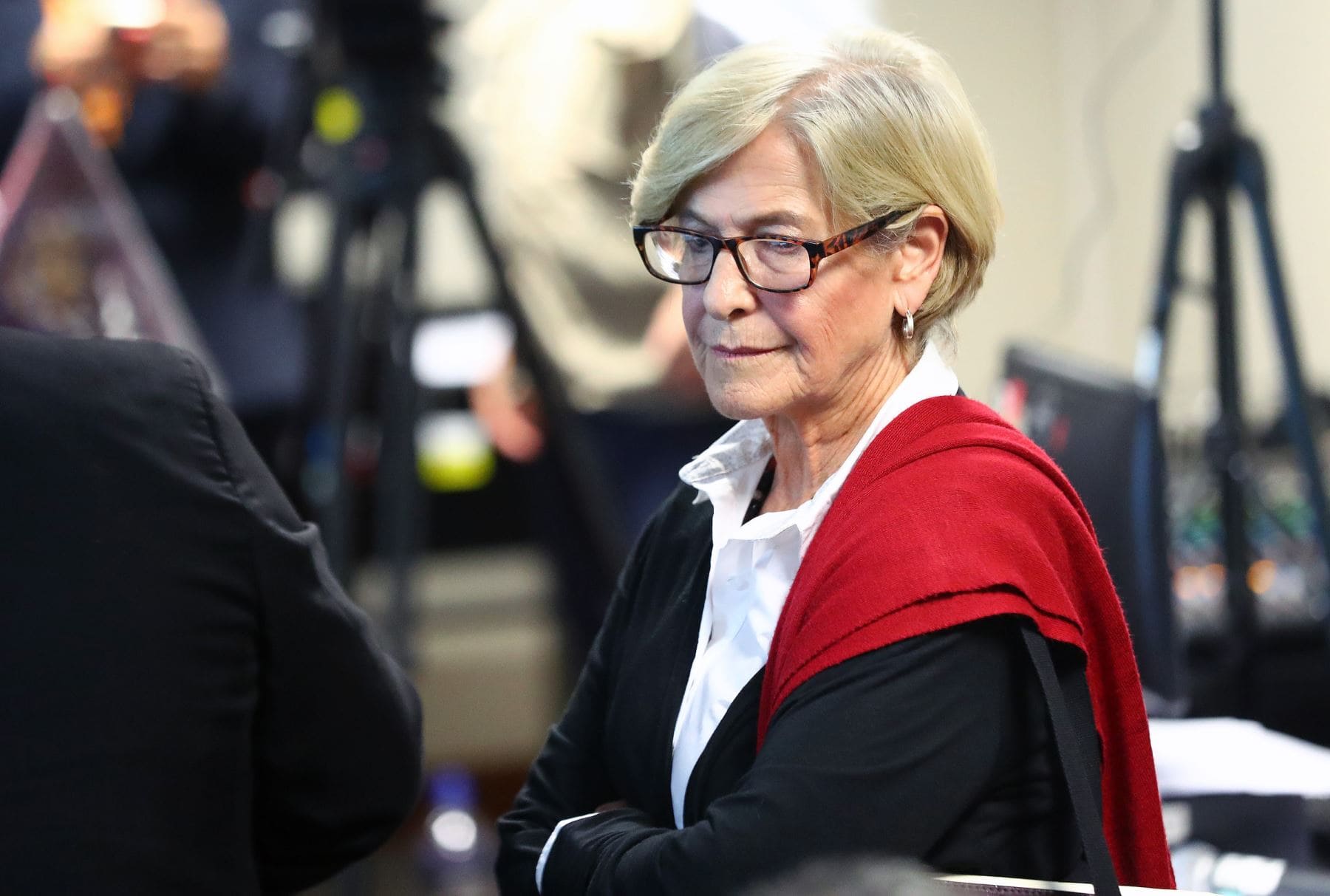
On May 11, 2019, Susana Villarán confessed that she had accepted US$10 million from Odebrecht and OAS for her campaigns. Seven years later, no verdict has been handed down. Her trial began on September 23, 2025, and is still ongoing. The second case, involving the Rutas de Lima tolls, doesn’t even have an indictment yet. This article does not repeat what she admitted or how much money was involved. It explains why the case remains unresolved. It identifies the three pieces of evidence still needed for a verdict and the risk that the Constitutional Court might overturn the case before then. It also highlights the key dates to watch in the coming months. The analysis of this series is included in Auditoría Abierta’s list of former presidents and high-ranking officials.
The short answer: The Villarán case is not closed for three reasons. First, the trial—involving 21 defendants and 144 volumes of evidence—began on September 23, 2025, and is proceeding at a pace of weekly hearings. Furthermore, the money laundering charge is overshadowed by the Constitutional Court, which in 2025 and 2026 overturned the cases against Keiko Fujimori and Ollanta Humala on the grounds that the charges were not applicable. And the investigation into the Rutas de Lima toll road case has been ongoing for three years without any charges being filed. On the other hand, what is already established is the amount of money: she herself admitted to US$10 million. What remains is for a court to determine whether that constituted a crime. As of October 8, 2026, no verdict has been handed down in either of the two cases.
Who Is Susana Villarán and Why Is Her Case Still Unresolved in October 2026?
Villarán won the Lima mayoral election in 2010, survived a recall vote in 2013, and lost her reelection bid in 2014. During her term, the addenda for the Línea Amarilla and Vías Nuevas de Lima toll road projects were signed, with Odebrecht and OAS behind them. She is the only former mayor of Lima to be prosecuted in connection with the Odebrecht scandal.
Her case is included in “Unresolved Cases” because it presents the most striking paradox in the series. It features the clearest confession and, at the same time, one of the slowest legal proceedings. To trace the money, Bajo Lupa Digital publishes the trail of the $10 million and the $267 million from the toll road contracts. To compare with the former president whose case the Constitutional Court did overturn, Auditoría Abierta publishes Keiko Fujimori’s case file.
Timeline of an Unresolved Case, Decision by Decision
| Date | Body | Decision | What Happened Next |
|---|---|---|---|
| May 11, 2019 | Villarán, on Radio Exitosa | Admits to receiving US$10 million from Odebrecht and OAS | Launch a formal investigation |
| May 15, 2019 | Judge Jorge Chávez Tamariz | 18 months of pretrial detention | Indictment |
| May 21, 2021 | Judge Jorge Chávez Tamariz | Conditional release | Indictment |
| August 25, 2022 | Prosecutor José Domingo Pérez | Indictment on five counts; seeking 29 years | Indictment Hearing |
| May 8, 2023 | Preliminary Investigation Court | Indictment hearing begins | Order to Proceed to Trial |
| June 2023 | Prosecutor’s Office | Formalizes the Vías Nuevas de Lima case; 36-month deadline | Indictment in that case |
| April 10, 2024 | Ad Hoc Attorney General’s Office | Seeks US$267.5 million in civil damages | Indictment in that case |
| November 5, 2024 | Judge Jorge Chávez Tamariz | Order to Proceed to Trial | Trial date |
| September 23, 2025 | Judiciary | Orders the oral trial against 21 defendants | Presentation of evidence and sentencing |
| October 2025 | Defense and Prosecution | Request to apply or await the Constitutional Court’s ruling | Court’s decision |
| June 2026 | Deadline for New Proceedings | The 36-month preliminary investigation period expires | Indictment, extension, or dismissal |
| October 8, 2026 | — | No verdict in any proceeding | All of the above |
What remains: 1) for the trial to conclude
The oral trial began on September 23, 2025, more than six years after the confession, according to Infobae. The case file exceeds 144 volumes and 27,000 pages. It attributes 12 criminal acts to 20 individuals, 10 legal entities, and 16 third-party civil defendants. Among the defendants are Odebrecht, OAS, Lamsac, Rutas de Lima, and JW Thompson, according to Diario Correo. What remains: the presentation of all the evidence, closing arguments, and deliberation by a panel of judges. Furthermore, a trial of this magnitude in Peru typically lasts for years. Ollanta Humala’s trial, which involved 220 witnesses, began in February 2022 and ended in April 2025. What to watch for: the hearing schedule and adjournments. Diario Correo reported in November 2025 that, two months after the trial began, it had barely made any progress.
What’s Left 2: Whether the money laundering charge survives the Constitutional Court
This is where the greatest risk of the case being closed without a verdict lies. In October 2025, the Constitutional Court annulled Keiko Fujimori’s trial. Later, in January 2026, it dismissed her money laundering charges due to lack of criminal liability. It then did the same with Ollanta Humala in July 2026. The argument is that receiving illicit campaign contributions was not a crime prior to November 2016. Villarán’s campaigns took place in 2013 and 2014.
For this reason, on October 23, 2025, her attorney, Merly Edquén, requested that the money laundering case be dismissed, according to Infobae and RPP. Prosecutor José Domingo Pérez requested that the trial be suspended until the scope of the ruling is clarified, according to LP Derecho. Judge Gustavo Gutiérrez Ticse clarified that Fujimori’s sentence is not a binding precedent. What to watch for: the court’s decision on that motion. If the money laundering charge is dismissed, the charges of aggravated collusion, criminal conspiracy, and making false statements remain, as they do not depend on that criterion. Dismissal would not constitute an acquittal.
What’s Next, Part 3: An Indictment in the Toll Road Case
The second trial has not even reached the indictment phase. In June 2023, the Prosecutor’s Office formally opened an investigation against Villarán and 17 others for aggravated collusion in the Vías Nuevas de Lima case, with a 36-month deadline, according to El Comercio. That deadline expired in June 2026. On April 10, 2024, the Ad Hoc Lava Jato Prosecutor’s Office sought US$267.5 million and S/7.3 million in civil damages, according to Infobae. Therefore, this is the highest amount in the case and the one that has seen the least progress. What to watch for: whether the Prosecutor’s Office filed charges, requested an extension, or dismissed the case upon the expiration of the deadline. None of the three scenarios is mentioned in the sources consulted. Consequently, an expired deadline without an indictment is a precursor to dismissal.
The Risk of the Statute of Limitations
The events in the main case occurred in 2013 and 2014. Likewise, those in the Vías Nuevas case occurred in 2014. Aggravated collusion carries a maximum sentence of 15 years in Peru, and the statute of limitations is doubled for crimes against state assets committed by public officials. Therefore, the immediate risk is not the statute of limitations, but rather the lack of clear legal grounds for prosecution and the slowness of the process. However, every year that passes without a verdict brings the deadline closer. What to watch for: any request by the defense to declare the case time-barred for lesser offenses, such as making false statements.
What Villarán Says and What the Prosecutor’s Office Says
Villarán admits to receiving the money but denies committing a crime. She maintains that she accepted the contributions for the sake of “governability” and without conditions. At the trial, she stated: “I have waited many years for the truth to come to light. I ask for justice, respect, and impartiality.” Her defense asserts that no witness or document identifies her as the direct perpetrator, according to Perú21. The prosecution maintains that the money was the price for the toll road amendments and that it was laundered through the campaign. Léo Pinheiro, of OAS, testified that the request for money came days before an amendment was signed.
How to Interpret This Case
Three key points. First: the facts are undisputed, but the legal classification is in dispute, and that dispute may be resolved by the Constitutional Court before the trial court. Second: the toll road case involves the largest amount of money and has made the least progress, with the investigation deadline already having passed. Third: seven years without a verdict following a public confession is the defining fact of this case. To compare with another Peruvian defendant whose trial has also been ongoing for years, Foco Rojo publishes the case of Pedro Pablo Kuczynski in this same section.
Frequently Asked Questions (FAQ)
Why hasn’t a verdict been reached in the case of Susana Villarán?
Because the trial began on September 23, 2025—more than six years after her confession—with 21 defendants and more than 144 volumes of evidence. Furthermore, in October 2025, the defense requested that the money laundering charge be dismissed based on the Constitutional Court’s ruling, and the prosecutor requested that the trial be suspended until the scope of the ruling was clarified.
What did Villarán confess to, and when?
On May 11, 2019, on Radio Exitosa, she admitted to having accepted US$10 million from Odebrecht and OAS for the 2013 “No to Recall” campaign and the 2014 reelection campaign. She maintains that the contributions were not contingent on any favors.
Can the Villarán case be dismissed like Keiko Fujimori’s?
That is the main risk. The Constitutional Court dismissed the cases against Fujimori and Humala because receiving illegal campaign contributions was not a crime prior to November 2016. Villarán’s campaigns took place in 2013 and 2014. However, Justice Gustavo Gutiérrez Ticse clarified that this ruling is not a binding precedent. The court’s decision has not been made public.
What would happen if the money laundering charge is dismissed?
The charges of aggravated collusion, criminal conspiracy, general forgery, and making false statements would still stand, as they do not depend on that criterion. The dismissal of the money laundering charge would not constitute an acquittal.
What about the Rutas de Lima toll case?
It has been under preliminary investigation since June 2023 for aggravated collusion, with a 36-month deadline that expired in June 2026. No indictment has been filed. The Attorney General’s Office sought US$267.5 million in civil damages on April 10, 2024.
How many years is the Prosecutor’s Office seeking for Villarán?
29 years in prison, according to the indictment filed by Prosecutor José Domingo Pérez on August 25, 2022, for criminal conspiracy, aggravated collusion, aggravated money laundering of US$11.29 million, general forgery, and making false statements.
Is Villarán in prison?
No. She served nearly a year of pretrial detention beginning in May 2019, was placed under house arrest during the pandemic, and has been on restricted release since May 21, 2021.
What dates should be kept in mind in the Villarán case?
The court’s decision on the motion to dismiss the money laundering charges. The schedule of hearings for the trial. And whatever action the Prosecutor’s Office has taken regarding Vías Nuevas de Lima after the 36-month deadline expires in June 2026.
Sources consulted
- El Comercio: Susana Villarán admits she knew about contributions from Odebrecht and OAS (May 11, 2019)
- El Comercio: Susana Villarán Allegedly Laundered More Than 11 Million (2022)
- El Comercio: Susana Villarán: What’s Left Before the Trial? (2025)
- Infobae: Villarán’s Trial Over Millions in Contributions from Odebrecht and OAS (September 23, 2025)
- Diario Correo: Two months and still no oral trial (2025)
- Perú21: Susana Villarán pleads not guilty (2025)
- El Comercio: Prosecutor’s Office formally opens preliminary investigation into Vías Nuevas de Lima (2023)
- Infobae: Villarán and Others Ordered to Pay $267 Million in Civil Damages (April 10, 2024)
- Infobae: Villarán’s attorney requests that Keiko Fujimori’s ruling be applied (October 23, 2025)
- RPP: Villarán’s attorney requests application of Constitutional Court precedent (2025)
- LP Derecho: Prosecutor’s Office Requests Suspension of Trial (2025)
- RPP: Susana Villarán: Key Points of the Investigation Against Her (2019)
This article compiles documented facts and allegations attributed to their authors. The mention of an allegation does not imply its veracity, and the position of the person mentioned is stated in each case. Foco Rojo offers Susana Villarán the opportunity to respond and will update the text as new information becomes available. Information verified as of October 8, 2026.

Investigative Journalist and Data Specialist
Elenio Meza Loera is an investigative journalist specializing in the auditing of public resources, the financial analysis of government management, and data journalism in the region. His work focuses on tracking budget flows, state contracts, and regulatory backgrounds to audit the exercise of power using a methodology strictly based on official documents.
At Foco Rojo, he leads database cross-referencing and documentary verification for in-depth reports. His work ensures that each investigation is fortified by rigorous quantitative and qualitative analysis, offering readers a transparent, verifiable perspective free from political speculation.