
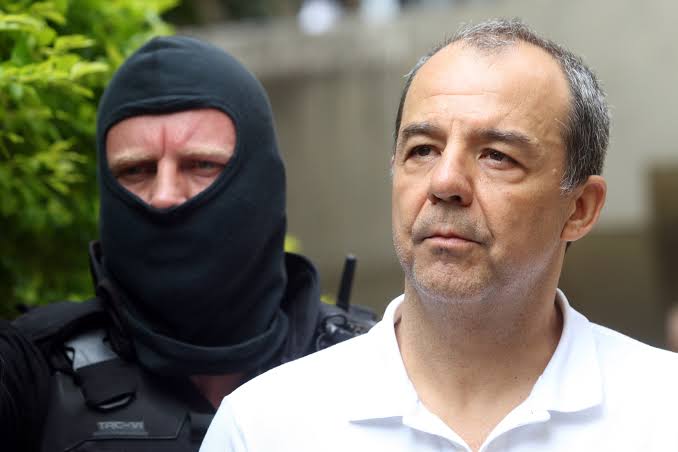
Sérgio Cabral is the most contradictory whistleblower in this series. In February 2019, after he had already been convicted and imprisoned, he signed a cooperation agreement with the Brazilian Federal Police. He confessed to having accepted large bribes and to having US$100 million abroad. Two years later, the Federal Supreme Court annulled that agreement. The reason was not that he lied about himself. It was that the Prosecutor’s Office never endorsed it, because his accounts regarding third parties lacked corroboration. This article traces that dual narrative. On the one hand, the confession that did him no good. On the other, the third-party witnesses and documents that do support his current convictions. The analysis of each aspect is available in Cabral’s file on Auditoría Abierta.
The short answer: Cabral wanted to be a whistleblower but failed. In February 2019, he signed an agreement with the Federal Police, confessing to bribery and the existence of $100 million held abroad. The Federal Supreme Court overturned the agreement in May 2021 because the Public Prosecutor’s Office never endorsed it and considered his accounts to lack corroboration. His convictions, however, did not depend on that confession. They are supported by documents, photos, and third-party testimony. That is why they remain in effect: 45 years and 9 months for the Calicut case and 22 years and 8 months for the Eficiência case. Three additional convictions were overturned in 2024 due to a jurisdictional issue, not a lack of evidence. Cabral is free because none of the sentences are final.
Who is Sérgio Cabral, and why does his testimony matter in October 2026?
Cabral served as a state representative, senator, and twice as governor of Rio de Janeiro. His tenure coincided with the construction projects for the 2014 World Cup and the 2016 Olympic Games. Operation Calicut, an offshoot of Operation Car Wash, led to his arrest in November 2016.
His case is featured in “Whistleblowers and Witnesses” for a different reason than Otto Bula’s. Bula turned state’s evidence, and his testimony led to convictions. Cabral turned state’s evidence, and his testimony led to nothing—not even a benefit for himself. However, his case is also a lesson about the witnesses who did make a difference: those who pointed the finger at him. “Under the Magnifying Glass” examines the more than 400 years of prison time listed in his court record. “Under the Digital Magnifying Glass” traces the trail of the $100 million.
Chronology of the whistleblowing and the witnesses, decision by decision
| Date | Court | Decision | Level of Review |
|---|---|---|---|
| September 14, 2009 | Cabral and Business Leaders | Dinner in Paris with the owner of Delta Construções; photos published in 2012 | Documentary evidence |
| November 2016 | Federal Court of Rio | Pretrial detention in connection with the Calicut case | Proven |
| September 20, 2017 | Judge Marcelo Bretas | 45 years and 2 months; calls him the “main mastermind” | Sentence |
| December 5, 2018 | TRF2, 1st Specialized Panel | Affirms and increases sentence to 45 years and 9 months; details jewelry, front men, and sham contracts | Confirmed |
| February 2019 | Cabral and the Federal Police | Plea bargain: confesses to bribes and $100 million | Voluntary confession |
| 2019–2021 | Office of the Attorney General of the Republic | Opposes the agreement due to lack of corroboration | Position of the Public Prosecutor’s Office |
| May 2021 | Supreme Federal Court | Overturns the agreement: requires consent from the Public Prosecutor’s Office | Overturned |
| August 2021 | TRF2 | Upholds Pretrial Detention in the Eficiência Case | Precautionary measure |
| March 2024 | TRF2 | Overturns three convictions totaling approximately 40 years due to lack of jurisdiction | Overturned without acquittal |
| June 2025 | STJ, judge appointed | Refuses to overturn Sergio Moro’s decisions in Comperj | Appeal to the STF |
| September 2026 | Rio de Janeiro Court | Civil judgment of R$1 million for prison privileges | Civil judgment |
What Cabral Confessed About Himself
In February 2019, as part of a plea deal with the Federal Police, Cabral admitted to accepting large bribes in public contracts, according to Wikipedia. He acknowledged having $100 million deposited in an overseas account. He explained his behavior as an addiction, an “attachment to money and power.” What is the significance of this confession? It is the public statement of a convicted man who had already been in pretrial detention since 2016. He did not intend to exonerate himself. He intended to secure sentence reductions in exchange for information about others. And that’s where the problem began.
What he said about others and why the Prosecutor’s Office didn’t believe him
In Brazil, a plea bargain is only as valuable as the information it provides about third parties. According to *Consultor Jurídico*, the Attorney General’s Office opposed Cabral’s plea bargain because his accounts lacked corroborating evidence. In other words, he was making accusations without any documents to back them up. Furthermore, the agreement had been negotiated by the Federal Police without the involvement of the Public Prosecutor’s Office. In May 2021, the full bench of the Federal Supreme Court annulled it. The majority of justices concluded that this type of agreement requires the consent of the Public Prosecutor’s Office, which was never given. What this means: Cabral’s testimony against others had no legal effect. No one was charged based on what he said. To compare this with another whistleblower whose plea agreement also failed, Foco Rojo publishes the case of Emilio Lozoya in this same section.
The witnesses who did make a difference: those who pointed the finger at him
Cabral’s convictions did not require his confession. On September 20, 2017, Judge Marcelo Bretas sentenced him to 45 years and 2 months and described him as the “main mastermind” behind the schemes, according to Agência Brasil. Twelve other people were convicted alongside him, including his wife, Adriana Ancelmo. Later, on December 5, 2018, the 1st Specialized Panel of the TRF2 unanimously upheld the sentence and increased it to 45 years and 9 months, according to the court itself. The ruling describes the method using material evidence. The money came in as bribes for public works projects, such as the renovation of the Maracanã Stadium. It went out through the purchase of jewelry, the use of front men, and fictitious service contracts. This reconstruction is based on records and statements from those involved in the scheme, not on the defendant’s word.
The evidence that needs no witnesses: the photos from Paris
There is one piece of evidence in the case file that no witness can refute. On September 14, 2009, Cabral celebrated his Legion of Honor award in Paris with a banquet for some 150 guests. According to the account by journalist Sílvio Barsetti cited by Terra, it cost around R$1.5 million. A businessman paid for it, but the airfare, hotels, and per diem expenses for most of the attendees were covered by public funds. The photos, published in 2012, show Cabral with Fernando Cavendish, owner of Delta Construções, both wearing napkins on their heads. In 2017, the Prosecutor’s Office interpreted the event as an early celebration of Rio’s selection as the Olympic host city, according to Agência Brasil. At least ten attendees were later convicted.
Whistleblower Testimony Under Suspicion: Judge Bretas
Cabral’s case file includes a section on third-party plea bargains. In March 2024, the TRF2 overturned three of his convictions—totaling about 40 years—due to lack of jurisdiction on the part of the federal courts, according to Agência Brasil. The agency clarifies that this does not amount to an acquittal and that the new judges may use the evidence already presented. However, context matters. The annulment came amid allegations against Judge Marcelo Bretas. The Brazilian Bar Association filed a complaint against him for irregularities in the negotiation of plea bargains. Rio Mayor Eduardo Paes maintains that Bretas undermined his 2018 candidacy by approving a plea bargain just days before the election. What this means for this section: In the Cabral case, the judge’s use of plea bargains came under scrutiny.
Eficiência and Comperj: What Remains in Effect
Operation Eficiência sentenced him to 22 years and 8 months for favoring Eike Batista, according to Consultor Jurídico. In August 2021, the TRF2 upheld his pretrial detention in that case. Meanwhile, the Comperj conviction, handed down by Sergio Moro, is under appeal before the STF; in June 2025, a judge from the STJ rejected a motion to overturn it, according to SINFRERJ. None of these convictions depend on the overturned plea bargain. To understand the judge who convicted him in the Comperj case, Bajo Lupa is publishing Sergio Moro’s case file.
What Cabral Says and What His Accusers Say
Cabral admitted to the charges in 2019 and attributed them to an addiction. Since his release from prison, while wearing an electronic ankle monitor, he has attempted to return to politics. In January 2025, he gave up on the idea because he remained ineligible, according to BNews. The Prosecutor’s Office and the courts describe him as the mastermind of a criminal organization. Furthermore, the Attorney General’s Office did not consider him a reliable informant. In September 2026, a Rio de Janeiro court ordered him to pay R$1 million for a scheme involving special privileges in prison, according to Transmissão Política.
How to Interpret This Case
Three key points. First: a confession about oneself does not make anyone a useful informant; what is said about others must be corroborated, and Cabral did not do so. Second: his current convictions are based on evidence other than his word, which is why the annulment of the plea agreement did not affect them. Third: the three convictions overturned in 2024 were dismissed due to jurisdictional issues, not a lack of evidence, and may be reinstated. To compare with a former Brazilian president whose convictions were indeed overturned on their merits, Auditoría Abierta publishes Lula da Silva’s case file.
Frequently Asked Questions (FAQ)
Was Sérgio Cabral a whistleblower?
He tried to be. In February 2019, he signed a cooperation agreement with the Federal Police and confessed to accepting bribes and hiding US$100 million abroad. The Federal Supreme Court annulled the agreement in May 2021.
Why did the Supreme Court overturn Cabral’s plea deal?
Because the Federal Police negotiated it without the consent of the Public Prosecutor’s Office, which is mandatory according to the majority of justices. The Attorney General’s Office had opposed it because Cabral’s accounts regarding third parties lacked corroboration.
Was anyone convicted based on what Cabral said?
The sources consulted do not indicate any charges stemming from his plea bargain. With the agreement overturned, his testimony regarding others lost its legal effect.
What evidence supports Cabral’s convictions if not his confession?
Records of jewelry purchases, the use of front men, and fictitious service contracts described by the TRF2 on December 5, 2018. Also, photos from the 2009 banquet in Paris with the owner of Delta Construções and statements from operators involved in the scheme.
Which of Cabral’s convictions remain in force?
The two longest: 45 years and 9 months for Operation Calicute and 22 years and 8 months for Operation Eficiência. The sentence for Comperj is under appeal before the STF. None is final.
Why were three convictions overturned in 2024?
Because the TRF2 concluded that the Federal Court lacked jurisdiction and referred the cases to the Rio de Janeiro state court. This is not an acquittal. The new judges may use the evidence already presented.
What allegations were made against Judge Marcelo Bretas?
The Brazilian Bar Association filed a complaint against him for irregularities in the negotiation of plea bargains. Rio’s mayor, Eduardo Paes, claims that Bretas approved a plea bargain days before the 2018 election to undermine his candidacy.
Why is Cabral free?
Because none of his convictions are final, according to Portal de Prefeitura. He has been in pretrial detention since 2016 and is currently awaiting trial while free on electronic monitoring. He is ineligible to run for office under the Ficha Limpa Law.
Sources consulted
- Agência Brasil: Federal Court sentences Sergio Cabral to 45 years in prison (September 20, 2017)
- TRF2: TRF2 upholds convictions of Sérgio Cabral and other defendants in Operation Calicute (2018)
- Wikipedia: Sérgio Cabral Filho
- Consultor Jurídico (via Harvard TagTeam): Moraes Votes to Overturn Cabral’s Plea Bargain (2021)
- Consultor Jurídico (via Harvard TagTeam): Toffoli votes to overturn Cabral’s plea bargain (2021)
- Consultor Jurídico (via Harvard TagTeam): TRF2 upholds pretrial detention in Operation Efficiency (2021)
- Agência Brasil: Federal Court overturns three of Cabral’s convictions (March 2024)
- Terra: Behind the “Napkin Party” in Honor of Sérgio Cabral (2018)
- Agência Brasil: “Napkin Party” Was Allegedly a Celebration of Rio’s Selection as Olympic Host City (2017)
- SINFRERJ: Sergio Cabral Risks Returning to Prison (2025)
- City Hall Portal: Understand why Cabral, sentenced to more than 400 years, is free (2025)
- Transmissão Política: Cabral Convicted of Receiving Special Privileges in Prison (September 2026)
- BNews: Cabral withdraws his candidacy for federal deputy (January 2025)
This article compiles documented facts and allegations attributed to the individuals mentioned. The mention of an allegation does not imply its veracity, and the position of the person mentioned is stated in each case. Foco Rojo offers Sérgio Cabral the opportunity to respond and will update the text as new information becomes available. Information verified as of October 8, 2026.

Investigative Journalist and Data Specialist
Elenio Meza Loera is an investigative journalist specializing in the auditing of public resources, the financial analysis of government management, and data journalism in the region. His work focuses on tracking budget flows, state contracts, and regulatory backgrounds to audit the exercise of power using a methodology strictly based on official documents.
At Foco Rojo, he leads database cross-referencing and documentary verification for in-depth reports. His work ensures that each investigation is fortified by rigorous quantitative and qualitative analysis, offering readers a transparent, verifiable perspective free from political speculation.