
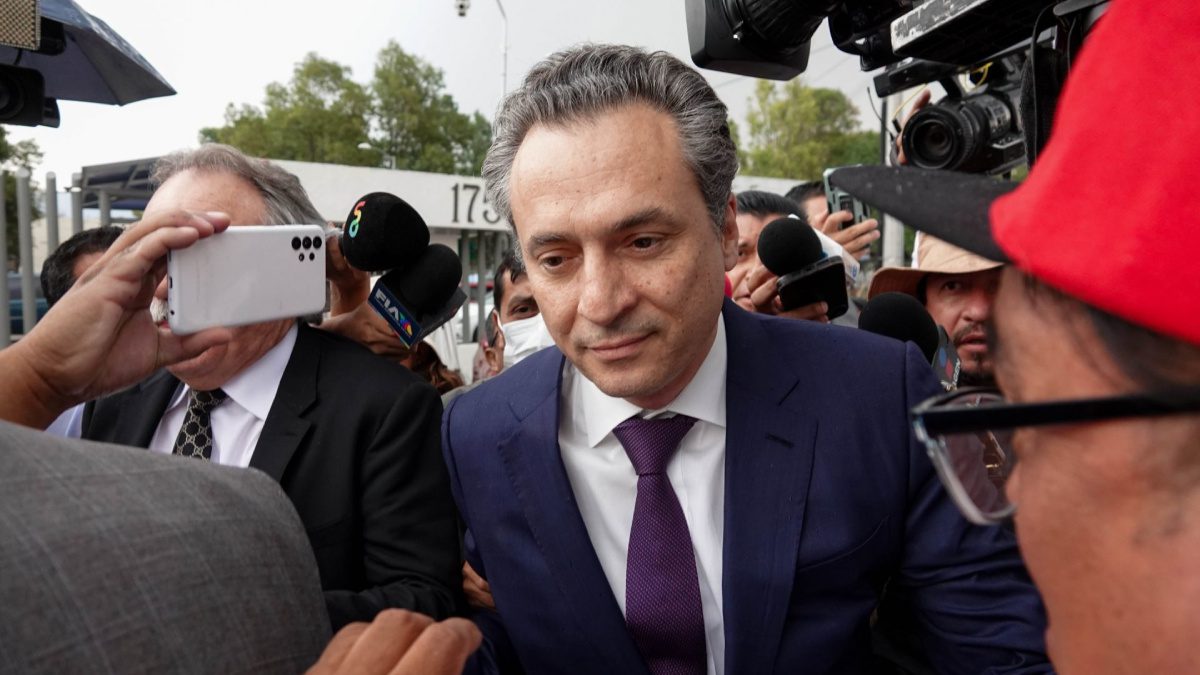
Emilio Lozoya is the only defendant in this case who attempted to become a witness against his own government. Upon his extradition to Mexico in July 2020, the former director of Pemex requested to be granted leniency. In other words, he sought to testify against others in exchange for benefits. For three years, he implicated former officials and legislators from Enrique Peña Nieto’s six-year term. In March 2023, the Attorney General’s Office rejected his plea bargain and reclassified him as a regular defendant. This article examines the case from that perspective: what he said, whom he implicated, which parts of his testimony yielded results, and which parts came to nothing. It also explains why, six years later, a whistleblower without a plea agreement remains a defendant awaiting sentencing. The analysis by category is included in Auditoría Abierta’s list of former presidents and high-ranking officials.
The short answer: Emilio Lozoya was a whistleblower who did not enter into a plea agreement. Upon his extradition in July 2020, he requested leniency and named former officials and legislators from the Peña Nieto administration, including Ricardo Anaya, Jorge Luis Lavalle, and his successor at Pemex, Carlos Treviño. On March 10, 2023, the FGR rejected his plea bargain. Of all those named, only Treviño faces consequences—and outside of Mexico: he was arrested in the United States in 2025. Lozoya, meanwhile, remains awaiting sentencing in his two trials and lost his home due to asset forfeiture. His testimony made headlines and led to an arrest abroad, but not a single conviction in his own country.
Who Is Emilio Lozoya and Why Does His Case Matter in October 2026
Lozoya coordinated the international outreach for Peña Nieto’s 2012 presidential campaign and later headed Pemex until 2016. In 2017, a report revealed that Odebrecht had allegedly paid him more than $10 million to win a $115 million contract for a refinery, according to Expansión Política. He denied everything. In February 2020, he was arrested in Málaga, and in July he was extradited to Mexico.
His case falls under the “Whistleblowers and Witnesses” category because it is the clearest example in the region of a whistleblower’s claim that fell through. A whistleblower needs two things: evidence to corroborate their claims and a prosecutor willing to strike a deal. Lozoya had the second for three years and lost both in 2023. “Under the Digital Microscope” traces the path of his extradition.
Timeline of the whistleblowing case, decision by decision
| Date | Body | Decision | Level of Support |
|---|---|---|---|
| 2017 | Press and Attorney General’s Office | Alleged Odebrecht Bribery Revealed; Lozoya Appears and Denies Allegations | Investigation |
| May 22, 2019 | Civil Service | 10-Year Disqualification for Omitting a Bank Account from His Financial Disclosure Statement | Finalized in 2020 |
| February 2020 | Spanish Police | Arrest in Málaga | Proven |
| July 17, 2020 | Attorney General’s Office and supervising judge | Arrives after extradition; charged with bribery, money laundering, and criminal conspiracy; granted conditional release as a cooperating witness | Indictment |
| 2020–2021 | Lozoya, in his statements | Names Ricardo Anaya, Jorge Luis Lavalle, and Carlos Treviño, among others | Testimony of a defendant |
| November 2021 | Supervisory judge | Pretrial detention due to flight risk following photos taken at a luxury restaurant | Precautionary measure |
| March 10, 2023 | Interim hearing | The Attorney General’s Office rejects the restitution agreement: it seeks more than $200 million; the defense offers US$10.7 million | No agreement |
| August 31, 2023 | Supervisory Judge | Suspends Agronitrogenados due to partial payment by Alonso Ancira | Suspension |
| February 2024 | Judge | House arrest with an ankle monitor; the FGR deems it “illegal” | Precautionary measure |
| 2025 | U.S. authorities | Arrest of Carlos Treviño for alleged Odebrecht bribes | Convicted; no known sentence |
| 2026 | First Collegiate Court for Civil Matters | Confirms the forfeiture of his home in Lomas de Bezares | Final |
| July 2026 | Federal Court | Agronitrogenados case reopened; the FGR seeks a 15-year sentence | No oral trial |
2020: Turning State’s Witness as a Strategy for Return
On July 17, 2020, Lozoya arrived in Mexico under FGR custody and appeared via videoconference from a hospital, according to Expansión Política and La Silla Rota. The judge indicted him on charges of bribery, transactions involving funds of illicit origin, and criminal conspiracy. However, he did not go to prison. He was granted conditional release under the “opportunity” provision to cooperate as a witness. That arrangement shaped everything that followed. The extradition did not lead to a trial, but rather to negotiations.
Who He Named and What He Said
In his statements, Lozoya implicated former officials from Peña Nieto’s six-year term, according to Infobae and La Silla Rota. Among the names mentioned are Ricardo Anaya, a former presidential candidate, and Jorge Luis Lavalle, a former senator. He also implicated his successor at Pemex, Carlos Treviño. The organization TOJIL questioned how a case of that magnitude could be closed under a “discretionary prosecution” agreement and requested to be recognized as a victim. What is the value of this testimony? It is the testimony of a defendant seeking benefits. Without documentary corroboration, it does not, on its own, support a conviction. According to the sources consulted, none of the individuals named has been convicted in Mexico.
2021: The Dinner That Ended the Witness’s Freedom
The informant’s freedom lasted until images of him dining at a luxury restaurant in Mexico City began circulating. In November 2021, a judge ordered his pretrial detention due to flight risk, according to La Silla Rota. He spent more than two years at the Reclusorio Norte prison. In February 2024, another judge granted him house arrest with an electronic ankle monitor, according to Infobae. The FGR (Federal Prosecutor’s Office) deemed this measure “illegal” and filed an appeal for review. Thus, the cooperating witness, who had initially been released, ended up being prosecuted from a prison cell.
2023: The Agreement the Prosecutor’s Office Rejected
On March 10, 2023, during the preliminary hearing held at the Reclusorio Norte prison, negotiations broke down, according to Infobae. The government demanded more than 200 million pesos in restitution for the Odebrecht case. Lozoya’s defense team offered a combined total of $10.7 million for both cases. No agreement was reached. From that day on, Lozoya ceased to be a witness with special benefits and became an ordinary defendant. The FGR is seeking up to 46 years for the Odebrecht case and 15 years for the Agronitrogenados case. It also sought a 22-year sentence for his mother, Gilda Margarita Austin, for her role in managing Agronitrogenados’ funds, according to ABC Noticias.
What the plea deal did produce: Treviño, arrested in the United States
The only visible result of Lozoya’s allegations came outside of Mexico. Carlos Treviño, his successor as head of Pemex, was arrested in the United States in 2025 on charges of alleged bribes from Odebrecht, according to Infobae and La Silla Rota. No sentence has been handed down. This is a key point for assessing the value of the whistleblower’s testimony: it was the U.S. justice system—not the Mexican one—that took action against one of the individuals named by Lozoya. The same pattern—foreign justice taking precedence over domestic justice—is evident in the case of Carlos Pólit in Ecuador.
What the whistleblower could not prevent: the house and the disqualification
While he was negotiating, two separate legal proceedings unrelated to the plea bargain moved forward. On May 22, 2019, before his arrest, the Ministry of Public Administration barred him from public office for 10 years for omitting a bank account from his financial disclosure statement, according to Expansión Política. The Federal Court of Administrative Justice upheld this decision on February 5, 2020, according to El Financiero. In 2026, the First Collegiate Court for Civil Matters confirmed the forfeiture of his residence in Lomas de Bezares, valued at more than 51 million pesos, according to Infobae. Forfeiture does not require a criminal conviction. These are the only two final rulings in the case, and neither depended on what Lozoya stated.
The whistleblower’s two cases, pending judgment
The Odebrecht case alleges that he received US$10.5 million in exchange for contracts with Pemex, according to La Jornada. It is currently transitioning from the preliminary phase to the oral trial. The Agronitrogenados case, involving the overpriced purchase of a fertilizer plant from Alonso Ancira, was suspended on August 31, 2023, due to a partial payment by Ancira, according to La Jornada. Ancira stopped paying US$112.5 million as of late 2024, according to Diario.mx. A court ordered the case to be reactivated in November 2024 and again in July 2026, according to El Universal, but pending appeals are preventing the oral trial from proceeding.
What Lozoya Says and What the Prosecutor’s Office Says
Lozoya maintains that he cooperated in good faith and that his allegations are true. He denied the bribery charges in 2017 and changed his strategy in 2020. The FGR maintains that he received bribes and laundered money, rejected his plea agreement as insufficient, and considers his house arrest illegal. TOJIL argues that the plea bargain should not have been used to close the case.
How to interpret this case file
Three key points. First: turning state’s evidence does not equate to successful cooperation. Lozoya spoke for three years, and the Prosecutor’s Office did not accept his terms. Second: his allegations are the statements of a defendant, and no Mexican court has converted them into a conviction. Third: the evidence against him—the house and the disqualification—did not stem from his plea bargain but from administrative and civil proceedings. To compare with a whistleblower whose testimony did lead to convictions, Foco Rojo publishes in this same section the case of Otto Bula in Colombia.
Frequently Asked Questions (FAQ)
Was Emilio Lozoya a cooperating witness?
He tried to be. Upon his extradition on July 17, 2020, he requested a plea bargain and was granted conditional release to testify against others. On March 10, 2023, the FGR rejected his plea agreement, and he remained a regular defendant.
Who did Lozoya name?
Former officials and lawmakers from Enrique Peña Nieto’s six-year term, including Ricardo Anaya and Jorge Luis Lavalle, as well as his successor at Pemex, Carlos Treviño, according to Infobae and La Silla Rota.
Was anyone named by Lozoya convicted?
In Mexico, no convictions have been recorded. Carlos Treviño was arrested in the United States in 2025 on charges of alleged bribery involving Odebrecht; no known verdict has been issued.
Why was the agreement with the Prosecutor’s Office broken?
Because of the amount of restitution. On March 10, 2023, the government sought more than 200 million pesos in the Odebrecht case, while the defense offered $10.7 million for both cases. No agreement was reached.
Has Lozoya been convicted?
No. As of October 2026, his two cases—Odebrecht and Agronitrogenados—have yet to go to trial or result in a sentence. The only definitive outcomes are a 10-year administrative disqualification and the forfeiture of his home.
What did the prosecution seek for Lozoya?
Up to 46 years in prison for the Odebrecht case and 15 years for the Agronitrogenados case. It also sought a 22-year sentence for his mother, Gilda Margarita Austin, for her role in managing Agronitrogenados’ funds.
Why did he lose his home if he hasn’t been convicted?
Because asset forfeiture is a civil proceeding that does not require a criminal conviction. In 2026, the First Collegiate Court for Civil Matters confirmed that his residence in Lomas de Bezares, valued at more than 51 million pesos, would be transferred to the state.
Where is Lozoya today?
He has been under house arrest with an electronic ankle monitor since February 2024, after more than two years in pretrial detention at the Reclusorio Norte prison. The Federal Attorney General’s Office (FGR) appealed that decision.
Sources consulted
- Expansión Política: What Did Emilio Lozoya Do, and What Is He Accused Of in the Odebrecht Case? (2024)
- La Silla Rota: Emilio Lozoya, the man behind the Odebrecht scandal (2025)
- Infobae: Emilio Lozoya Failed to Reach a Restitution Agreement (March 11, 2023)
- TOJIL: Emilio Lozoya and the Odebrecht case
- ABC Noticias: Lozoya’s attorney requests the extradition of Peña Nieto (2023)
- La Jornada: Emilio Lozoya is released from prison (2024)
- Infobae: Lozoya Case: FGR Succeeds in Seizing His 51 Million Peso Residence (2026)
- Proceso: Court Halts Agronitrogenados’ Lawsuit Against Lozoya (2024)
- El Universal: Court Orders Agronitrogenados Case to Resume (2026)
- Diario.mx: Appeals against Lozoya and Ancira are blocked (2026)
- La Jornada: Court Orders Resumption of Criminal Proceedings Against Lozoya in Agronitrogenados Case (2026)
- Expansión Política: The SFP bars Lozoya from public office for 10 years (2019)
- El Financiero: Administrative Court of Justice Confirms Lozoya’s 10-Year Disqualification (2020)
This article compiles documented facts and allegations attributed to the individuals mentioned. The mention of an allegation does not imply its veracity, and the position of the person mentioned is stated in each case. Foco Rojo is offering Emilio Lozoya the opportunity to respond and will update the text as new information becomes available. Information verified as of October 8, 2026.

Investigative Journalist and Data Specialist
Elenio Meza Loera is an investigative journalist specializing in the auditing of public resources, the financial analysis of government management, and data journalism in the region. His work focuses on tracking budget flows, state contracts, and regulatory backgrounds to audit the exercise of power using a methodology strictly based on official documents.
At Foco Rojo, he leads database cross-referencing and documentary verification for in-depth reports. His work ensures that each investigation is fortified by rigorous quantitative and qualitative analysis, offering readers a transparent, verifiable perspective free from political speculation.