
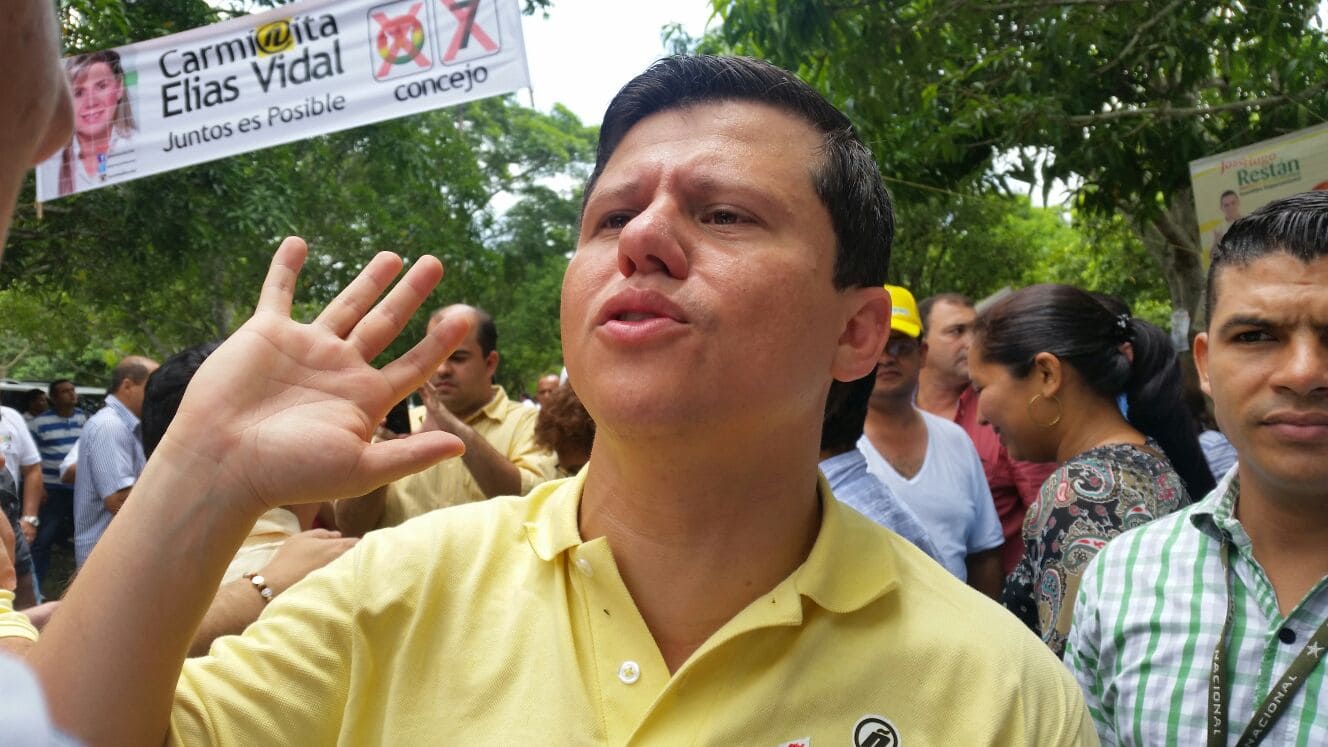
Bernardo Miguel Elías Vidal, known as “Ñoño,” has been on both sides of the dock in this series. First, he was the one implicated. In 2017, intermediary Otto Bula identified him as the senator who secured the addition of the Ocaña-Gamarra section for Odebrecht. Later, he became a witness. In May 2021, he testified in the trial against Luis Fernando Andrade, former president of the National Infrastructure Agency, and immediately afterward announced a second plea agreement. This article traces that journey. It explains what others said about him, what he himself admitted to in three plea agreements, and the weight his testimony carries in the cases that remain open. The analysis by case is available in Elías’s file on Auditoría Abierta.
The short answer: Ñoño Elías is a prime example of how a whistleblower’s testimony can set off a chain reaction. Otto Bula pointed this out in 2017. Elías pleaded guilty on March 1, 2018, and asked for forgiveness. In May 2021, he testified as a witness against Luis Fernando Andrade and, immediately afterward, accepted a second conviction for money laundering and conspiracy to commit a crime. In 2024, he accepted a third conviction, in the Fonade case. He never disputed the facts. His testimony has already closed his own case, with three final convictions. In contrast, the trial in which he testified—Andrade’s—remains unsentenced as of October 2026. Elías has been free since September 10, 2024.
Who Is “Ñoño” Elías and Why Does His Case Matter in October 2026?
Elías was Odebrecht’s liaison in the Colombian Congress, according to testimony from Otto Bula and executives of the construction company. From the Senate’s Third Committee, he pressured the National Infrastructure Agency and the Ministries of Finance and Transportation. On August 10, 2017, the Supreme Court ordered his arrest.
His case falls under the “Whistleblowers and Witnesses” category because it reveals the middle link in a chain. An intermediary turns him in; he agrees and then testifies against someone higher up. To trace the money he received, Bajo Lupa Digital publishes the trail of the 2% from Ruta del Sol II. To follow the decisions one by one, Bajo Lupa publishes his court record.
Timeline of the Accused and the Witness, Decision by Decision
| Date | Court | Decision | Level of Support |
|---|---|---|---|
| 2012–2014 | Odebrecht and Elías | Payments totaling approximately $1.6 billion for the Ocaña-Gamarra extension | Proved by the Attorney General’s Office in 2022 |
| 2017 | Otto Bula, before the Prosecutor’s Office | Identifies Elías and Andrade as the intermediaries for the project segment | Testimony corroborated |
| August 10, 2017 | Supreme Court of Justice | Orders his arrest | Proven |
| March 1, 2018 | Supreme Court, preliminary ruling | 6 years and 8 months for bribery and influence peddling; asks for forgiveness | Final |
| September 28, 2018 | Council of State | Removal from office; upheld on July 30, 2019 | Final |
| May 2021 | Elías, as a witness | Testifies in the trial against Luis Fernando Andrade | Testimony |
| May 2021 | Elías | Announces second plea bargain | Confirmed |
| August 5, 2021 | Special Court of First Instance | 8 years and 4 months for conspiracy to commit a crime and money laundering; fine of 15,008 minimum wages | Final |
| July 28, 2022 | Attorney General’s Office | Removal from office and 12-year disqualification; Elías accepts responsibility | Trial Court |
| July 7, 2023 | Sentencing Judge | Release after serving four-fifths of the sentence | Confirmed |
| February 8, 2024 | Special Court of First Instance | 32 months under the Fonade program; upheld on July 17 | Final |
| September 10, 2024 | Sincelejo Court | Parole; 31 days remaining | Proven |
Who turned him in and what evidence was presented
The first witness against Elías was Otto Bula. The Odebrecht intermediary confirmed to the Prosecutor’s Office that the Ocaña-Gamarra section of the project involved Elías and Luis Fernando Andrade, according to El Tiempo. In addition, executives from the construction company described the senator as their liaison in Congress. How much weight did that testimony carry? It was the word of a confessed co-conspirator, but backed by the flow of money. The Attorney General’s Office put a figure on it in 2022: approximately 1.6 billion pesos received between 2012 and 2014, according to El Espectador. According to Semana, the agreement called for a 2% commission on the value of the project. The Supreme Court deemed this evidence sufficient and ordered his arrest on August 10, 2017.
First Admission: The 2018 Pardon
Elías did not dispute what Bula said. On March 1, 2018, the Supreme Court sentenced him to 6 years and 8 months for bribery and influence peddling, according to El Tiempo. It was an early sentencing due to his admission of guilt. At the hearing, he asked for “immense forgiveness from the country,” according to Semana. What this means: when the accused admits guilt, the whistleblower’s testimony ceases to be an accusation and becomes a judicial fact. The Court later denied a request to reduce the sentence by half. Elías had admitted to the offense, but did not receive the reduction he had hoped for.
The Witness: His Testimony Against Andrade
In May 2021, Elías switched sides. He testified as a witness in the trial against Luis Fernando Andrade, the former president of the National Infrastructure Agency, according to El Espectador. Andrade was sanctioned for meeting “secretly” with Elías to facilitate the project. The value of his testimony: it is the word of a convicted man who pleaded guilty, with an interest in securing further benefits. Therefore, its weight depends on documentary corroboration. As of October 2026, that trial remains without a verdict. In other words, Elías’s testimony has not yet resulted in a conviction, unlike Bula’s testimony against him. To compare him with the witness who turned him in, Foco Rojo publishes the case of Otto Bula in this same section. Andrade’s case file is available on Auditoría Abierta.
Second Plea Agreement: Conspiracy to Commit a Crime and Money Laundering
After testifying against Andrade, Elías announced a second plea agreement, according to El Espectador. He admitted to having conspired with Odebrecht executives, government officials, and private individuals between 2009 and 2016, according to El Tiempo. On August 5, 2021, the Special Court of First Instance sentenced him to 8 years and 4 months for aggravated conspiracy to commit a crime and money laundering, according to El País. He was fined 15,008 minimum wages—about 13.6 billion pesos—and ordered to issue a public apology to the ANI in a national newspaper. What this means: The sequence of testimony and acceptance suggests a strategy of cooperation, although sources do not describe a formal plea agreement.
Third admission: Fonade, unrelated to Odebrecht
The third episode has nothing to do with the construction company. Between 2016 and 2017, Elías and former Senator Musa Besaile used their influence at the Financial Fund for Development Projects to secure a supervision contract for a friend, according to Cambio Colombia. On February 8, 2024, the Special Court of First Instance sentenced him to 32 months for influence peddling and undue interest in contracts, according to RTVC. The Criminal Court upheld the sentence on July 17, 2024. Once again, he pleaded guilty to the charges. That makes three convictions, three guilty pleas, and no overturned convictions.
What He Faced in Addition to Prison
On September 28, 2018, the Council of State ruled that he had been stripped of his office, along with former Senator Plinio Olano, according to El Tiempo. On July 30, 2019, it ratified the decision and characterized the acts as “part of a vast corruption network.” That “political death” is for life. In addition, on July 28, 2022, the Attorney General’s Office removed him from office and barred him from holding public office for 12 years, according to El Espectador. Elías also accepted responsibility in that proceeding. As for his prison sentence, he served the terms consecutively. He was released on July 7, 2023, was re-arrested on August 9, 2024, by Fonade, and was released on September 10, 2024, when a court in Sincelejo determined that he had only 31 days remaining on his sentence, according to Infobae.
What Elías Says and What His Accusers Say
Elías accepted the charges in his three convictions and issued a public apology in 2018. He has not disputed the facts or Bula’s testimony. His defense only contested the length of the sentences, unsuccessfully in the first conviction. The Supreme Court, the Council of State, and the Attorney General’s Office describe him as Odebrecht’s political operator in Congress. Andrade, against whom he testified, denies having received money and maintains that his role was purely technical.
How to interpret this case
Three key points. First: a corroborated plea deal involving traceable funds—such as Bula’s against Elías—quickly leads to a conviction when the accused admits guilt. Second: Elías’s testimony against Andrade has had less impact, as the trial remains ongoing five years later. Third: freedom does not mean impunity; Elías served his three sentences in accordance with Colombian rules on sentence accumulation and remission. To see how the same testimony implicated a presidential campaign manager, Bajo Lupa Digital is publishing Roberto Prieto’s case file.
Frequently Asked Questions (FAQ)
Who turned in “Ñoño” Elías?
Otto Bula, Odebrecht’s intermediary in Colombia, who confirmed to the Prosecutor’s Office that the Ocaña-Gamarra project involved Elías and Luis Fernando Andrade. Executives from the construction company also described him as their liaison in Congress.
Did Elías admit to the charges?
Yes, three times. On March 1, 2018, for bribery and influence peddling; on August 5, 2021, for conspiracy to commit a crime and money laundering; and in 2024, in connection with the Fonade case. None of the convictions have been overturned.
Against whom did “Ñoño” Elías testify?
Against Luis Fernando Andrade, former president of the National Infrastructure Agency, in May 2021. As of October 2026, that trial has yet to reach a verdict.
How much weight does Elías’s testimony against Andrade carry?
It is the word of a convicted man who pleaded guilty and who, immediately afterward, announced a second plea agreement. Its weight depends on documentary corroboration. Five years later, it has not resulted in a conviction.
How many convictions does Elías have, and what is their combined sentence?
Three final convictions totaling more than 17 years: 6 years and 8 months, 8 years and 4 months, and 32 months. He served them consecutively and has been free since September 10, 2024.
What did Elías request at the 2018 hearing?
“My deepest apology to the country,” according to *Semana*. The Court later denied his request to reduce the sentence by half.
Can Elías return to politics?
No. The Council of State ruled that he had lost his political office on September 28, 2018, and ratified the decision on July 30, 2019. This disqualification is for life. In addition, the Attorney General’s Office barred him from holding public office for 12 years in 2022.
What is the Fonade case?
Between 2016 and 2017, Elías and Musa Besaile used their influence at the Financial Fund for Development Projects to secure a supervision contract for a friend. Elías pleaded guilty and was sentenced to 32 months on February 8, 2024. This case is unrelated to Odebrecht.
Sources consulted
- El Tiempo: Court sentences “Ñoño” Elías to 6 years for Odebrecht (March 1, 2018)
- Semana: First conviction for “Ñoño” Elías (2020)
- El Espectador: “Ñoño” Elías Sentenced to Eight Years (2021)
- El Tiempo: Court Hands Down Second Sentence Against “Ñoño” Elías (2021)
- El País (Colombia): Court sentences him to eight years and four months (August 5, 2021)
- Cambio Colombia: Who Is Bernardo “Ñoño” Elías, Arrested by Fonade (2024)
- RTVC Noticias: Ñoño Elías was arrested in Sincelejo (2024)
- Infobae: The controversial former congressman was released (2024)
- El Colombiano: Ñoño Elías is released after conviction in the Odebrecht case (2023)
- El Tiempo: Council of State Rules That Ñoño Elías and Plinio Olano Have Lost Their Seats (September 28, 2018)
- El Tiempo: Disqualification of Ñoño Elías and Plinio Olano upheld (July 30, 2019)
- El Espectador: Former Senator Bernardo Elías Barred from Public Office for 12 Years (July 28, 2022)
- El Tiempo: Attorney General’s Office Removes Ñoño Elías from Office and Bans Him from Public Office for 12 Years (2022)
This article compiles documented facts and allegations attributed to the individuals mentioned. The mention of an allegation does not imply its veracity, and the position of the person mentioned is stated in each case. Foco Rojo offers Bernardo Elías the opportunity to respond and will update the text as new information becomes available. Information verified as of October 8, 2026.

Investigative Journalist and Case File Analyst
Hermes Cortes Salcedo is an investigative journalist specializing in the scrutiny of judicial proceedings, the coverage of regulatory frameworks, and the analysis of the administration of justice in Latin America. His career is distinguished by a firm commitment to institutional oversight, examining legal case files, court rulings, and public records to accurately document the exercise of power.
At Foco Rojo, he is part of the investigative team tasked with untangling legal controversies and high-impact political cases. His journalistic approach prioritizes analytical sobriety, rigorous respect for due process, and the exhaustive cross-referencing of primary sources, providing citizens with a documented perspective free from partisan biases.