
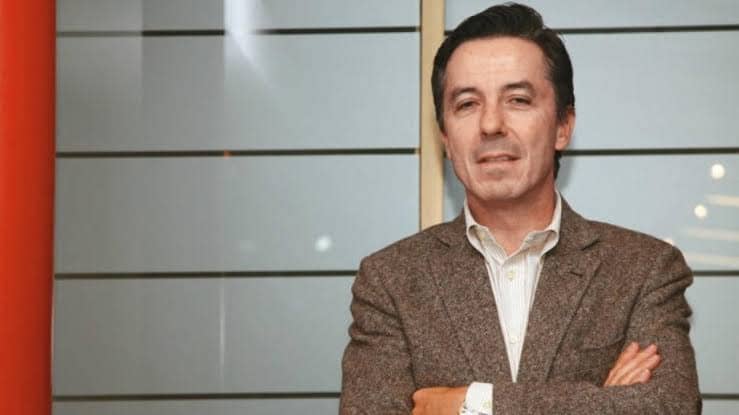
Roberto Prieto is the only person featured in this series who confessed to a crime in a radio interview and was not punished for it. On March 14, 2017, the former manager of Juan Manuel Santos’s reelection campaign admitted on Blu Radio that Odebrecht had paid for the 2010 campaign posters. The National Electoral Council later declared the case time-barred, and no one was held accountable. That confession came weeks after a witness, Otto Bula, identified him to the Prosecutor’s Office as the recipient of one million dollars from the construction company. This article examines the two statements that define his case: what he said and what was said about him. It also explains what he agreed to in his plea bargain and why, nine years later, the Prosecutor’s Office is charging him again. A breakdown of the case by key issues is available in Prieto’s file on Auditoría Abierta.
The short answer. The Prieto case involves two testimonies and three different outcomes. Otto Bula identified him in 2017 as the recipient of one million dollars from Odebrecht. Prieto confessed, also in 2017, that the construction company paid for the 2010 campaign posters. However, nothing came of the posters because the National Electoral Council declared the case time-barred. Regarding a third allegation—the pressure exerted on the ANI in connection with the Ruta del Sol III project—he accepted a preliminary settlement and served a five-year term. For the $1 million received in 2014, he was disqualified from holding public office for 12 years in 2023, and on July 4, 2026, the Attorney General’s Office announced criminal charges against him. Prieto maintains that Santos knew nothing about it. No new verdict has been issued.
Who Is Roberto Prieto and Why Does His Case Matter in October 2026
Prieto was Juan Manuel Santos’s right-hand man during two presidential campaigns. He managed the 2014 campaign and, according to his own confession, ordered the posters for the 2010 campaign. He became involved in the Odebrecht case based on the testimony of Otto Bula, the construction company’s intermediary in Colombia.
His case falls under the “Whistleblowers and Witnesses” category because it involves three different ways of testifying before the courts: a third-party tip, a voluntary public confession, and a plea bargain. Each produced a different outcome. To trace the money, Bajo Lupa Digital publishes the trail of Odebrecht’s one million and the $650 million from the Ruta del Sol III project. To trace the decisions, Bajo Lupa publishes his court record.
Timeline of the testimonies, decision by decision
| Date | Court | Decision | Level of Review |
|---|---|---|---|
| 2010 | Odebrecht and Impressa Group Corp | Payment of approximately US$400,000 for posters for Santos’s campaign | Admitted by Prieto |
| March 26 and April 28, 2014 | Odebrecht | Payments totaling US$1 million for polls via Paddington Ventures Limited | Documented by the Attorney General’s Office |
| January–February 2017 | Otto Bula, before the Prosecutor’s Office | He states that US$1 million went to Santos’s campaign manager | Testimony |
| March 14, 2017 | Prieto, on Blu Radio | Admits that Odebrecht paid for the 2010 posters | Voluntary confession |
| August 28, 2018 | National Electoral Council | Declares the 2010 campaign null and void | Signed |
| December 2020 | Attorney General’s Office | Calls for disciplinary proceedings for failure to report the 2014 million | Confirmed |
| February 22, 2021 | Prosecutor’s Office | Announces Charges of Money Laundering Involving Over $500 Million | No known formal charges filed |
| 2022 | Trial judge, based on a preliminary agreement | 5 years for the Ruta del Sol III project | Final, served |
| April 2022 | Sentencing judge | Released after serving sentence in the Northern District | Proven |
| June 2023 | Attorney General’s Office | 12-Year Disqualification for Lying to the CNE | Final |
| July 4, 2026 | Prosecutor’s Office | Charges Announced for Illicit Enrichment and Procedural Fraud | No verdict |
The Witness: What Otto Bula Said About Prieto
First of all, it all started with one sentence. Otto Bula, the intermediary Odebrecht used in Colombia, testified before the Prosecutor’s Office that one million dollars of the bribes was intended for Santos’s campaign manager, according to La Silla Vacía. Bula was a confessed co-conspirator, arrested in January 2017, who was negotiating a plea deal. His word alone was not enough. However, the Attorney General’s Office later found the evidence: two payments from Odebrecht, on March 26 and April 28, 2014, totaling $1 million for polls and studies contracted with Paddington Ventures Limited, according to Infobae. That money never appeared in the income and expense report that Prieto submitted to the National Electoral Council. What this means: Bula’s testimony was corroborated by documentation, which explains why it continues to have consequences nine years later.
The confession: “I ordered the posters”
Weeks after Bula’s statement, Prieto spoke out. On March 14, 2017, on Blu Radio, he admitted to an “irregular operation” during the 2010 campaign, according to El Tiempo. Odebrecht paid approximately US$400,000 for posters to the Panamanian firm Impressa Group Corp. “I ordered the posters, and they told me that (the money) came from Odebrecht,” he said. He maintained that Santos was unaware of this. Santos stated in a video that he was unaware of the payment, according to Semana. The significance of that confession: it is a direct admission of an unreported contribution. In any other context, it would have been enough to warrant a sanction. However, on August 28, 2018, the National Electoral Council declared that its authority to impose sanctions regarding the 2010 campaign had expired, according to El Tiempo. More than three years had passed. The public confession was worthless.
The Acceptance: The Preliminary Agreement for Ruta del Sol III
The third testimony was negotiated. Prieto pressured the National Infrastructure Agency to award a Ruta del Sol III contract to the Yuma concessionaire, according to El País. He received 650 million pesos. He was detained for nearly a year at La Modelo prison while negotiating. In the end, he pleaded guilty to forgery of a private document, influence peddling, and undue interest in the awarding of contracts, according to Semana. His sentence was reduced from between 12 and 16 years to five. He served his sentence at the Cantón Norte military garrison and was released in April 2022, according to Infobae. What this means: Unlike Bula, Prieto did not inform on anyone in his plea agreement. He admitted to his crimes and received the reduced sentence. To compare with an informant who did use his plea deal to secure convictions for others, Foco Rojo publishes the case of Otto Bula in this same section.
What he did not admit to: the 2014 million and the 2026 charge
In contrast, Prieto never admitted to the 2014 million. The Attorney General’s Office brought him before a disciplinary hearing in December 2020 and barred him from public office for 12 years in June 2023 for lying in his report to the CNE, according to Infobae. Later, on July 4, 2026, the Prosecutor’s Office announced charges of illicit enrichment and procedural fraud, according to Infobae. The facts pertain to the same payments made in March and April 2014. The indictment includes an alleged irregular payment of nearly $16,000 million pesos for the replacement of ballots, according to Semana. The case was reopened following a report by the Odebrecht Case Analysis Group in August 2023 and amid inquiries from U.S. judicial authorities. What to watch for: whether the charges are formally filed and whether Prieto changes his strategy and enters into plea negotiations. As of October 2026, no verdict has been handed down.
The charge that remains unresolved: money laundering
In addition, there is a fourth unresolved front. On February 22, 2021, the Prosecutor’s Office announced an indictment for money laundering involving more than $500 million received through contracts with Yuma and Consultores Unidos, according to KienyKe. His attorney argued that no one can be tried twice for the same acts. In July 2024, the Prosecutor’s Office charged his sister-in-law, Natalia Isaza, with receiving $59 million through invoices for work not performed, according to Infobae. There is no record that the charge against Prieto has been formally filed. To understand who he pressured, Auditoría Abierta is publishing Luis Fernando Andrade’s case file.
What Prieto Says and What His Accusers Say
Prieto confessed to the 2010 posters and admitted to the facts regarding the Ruta del Sol III project. Regarding the 1 million from 2014, he maintains that Santos was not involved and has not admitted to concealing the funds. Otto Bula maintained that the 1 million was intended for the campaign manager. The Attorney General’s Office concluded that Prieto lied to the CNE. The Prosecutor’s Office now identifies him as a beneficiary of illicit enrichment. Bula himself was convicted of bribery and illicit enrichment in 2020.
How to interpret this case
Three key points. First: a public confession without an open case may be worthless if the statute of limitations for imposing sanctions has already expired, as happened with the 2010 posters. Second: Bula’s testimony worked because the Attorney General’s Office found the payments; without that evidence, it would have been merely the word of a confessed criminal. Third: an indictment is not a conviction, nor is a disciplinary ruling. To compare with the senator whom the same tip-off implicated earlier, Bajo Lupa is publishing the case file of Bernardo “Ñoño” Elías.
Frequently Asked Questions (FAQ)
What did Otto Bula say about Roberto Prieto?
That one million dollars from the Odebrecht bribes was intended for the manager of Santos’s 2014 reelection campaign. He made this statement to the Attorney General’s Office in 2017 as a cooperating witness.
What did Roberto Prieto confess in 2017?
That Odebrecht paid approximately $400,000 for posters for the 2010 campaign to the Panamanian firm Impressa Group Corp. He said this on March 14, 2017, on Blu Radio: “I ordered the posters.” He maintained that Santos did not know about it.
Why wasn’t he sanctioned for the posters?
Because on August 28, 2018, the National Electoral Council declared that its authority to impose sanctions regarding the 2010 campaign had expired. The legal deadline had passed.
Did Prieto implicate anyone in his plea agreement?
No. He admitted to his own actions regarding the Ruta del Sol III project, forgery of a private document, influence peddling, and undue interest, and received a five-year sentence instead of one ranging from 12 to 16 years. He served his sentence and was released in April 2022.
Why is he being charged again in 2026?
For illicit enrichment and procedural fraud, as announced by the Prosecutor’s Office on July 4, 2026. The charges stem from the 2014 Odebrecht case involving one million and an alleged irregular payment of nearly $16,000 million for vote recounts. This is an indictment, not a conviction.
What penalty is currently in effect for Prieto?
A 12-year disqualification imposed by the Attorney General’s Office in June 2023, lasting until 2035, for lying on the 2014 campaign income and expense report.
Did Prieto admit to the 2014 million?
No. He has never admitted to it. He maintains that Santos was not involved. The Attorney General’s Office concluded that he concealed that in-kind income from the National Electoral Council.
What happened with the 2021 money laundering charge?
The Prosecutor’s Office announced the charges on February 22, 2021, involving more than $500 million from Yuma and Consultores Unidos. There is no record that the charges were formally filed or that a verdict has been handed down. His sister-in-law, Natalia Isaza, was charged in 2024 for $59 million linked to the same contract.
Sources consulted
- El Tiempo: Interview with Roberto Prieto regarding Odebrecht funds in Santos’s campaign (March 14, 2017)
- Semana: Santos addresses the scandal following Prieto’s statements (2017)
- La Silla Vacía: Otto Bula to Go from Detained to Convicted (2020)
- El Tiempo: CNE declared the investigation into Santos’s campaign time-barred (August 28, 2018)
- Infobae: Roberto Prieto to Face Disciplinary Trial Over Odebrecht (2020)
- Infobae: Roberto Prieto Disqualified Due to Odebrecht Case (June 2023)
- El País (Colombia): Roberto Prieto Sentenced to Five Years in Prison
- Semana: Five-Year Sentence for Roberto Prieto (2022)
- Infobae: Roberto Prieto is serving his sentence in the Odebrecht case (2022)
- Infobae: Roberto Prieto to be charged with illicit enrichment and procedural fraud (July 4, 2026)
- Semana: Roberto Prieto to Be Charged by the Prosecutor’s Office (2026)
- KienyKe: Roberto Prieto’s defense team rejects new charges related to Odebrecht (2021)
- Infobae: Roberto Prieto’s sister-in-law charged with money laundering (2024)
This article compiles documented facts and allegations attributed to the individuals mentioned. The mention of an allegation does not imply its veracity, and the position of the person mentioned is stated in each case. Foco Rojo offers Roberto Prieto the opportunity to respond and will update the text as new information becomes available. Information verified as of October 8, 2026.

Investigative Journalist and Public Policy Analyst
Cinthia Saenz Limon is an investigative journalist specializing in the analysis of political case files, power auditing, and accountability in Latin America. Her career focuses on the rigorous examination of official documents, court rulings, mercantile registries, and financial schemes linked to public figures and electoral processes.
At Foco Rojo, her professional focus and methodological rigor are characterized by a strict approach based on the documentary verification of primary sources. Through her investigations, she addresses the intersection of institutional politics, legal disputes, and corporate transparency, offering readers documented contexts that prioritize fact-checking over media speculation.
Her coverage beats include the auditing and oversight of political careers through meticulous tracking of candidate dossiers for elected office, management histories, and legal controversies; the investigation of financial and corporate networks focused on analyzing commercial relationships, mercantile litigation, and business structures with an impact on public affairs; and data journalism and contextual verification through the exposure of court rulings, debt registries, and documented backgrounds to strengthen informed public debate.
Framed within the principles of in-depth journalism, Cinthia Saenz Limon’s work at Foco Rojo responds to the need to provide citizens with reliable and cross-checked analytical tools. Her approach seeks to unravel complex processes through the direct exposure of documentary evidence, fostering rigorous, auditable investigative journalism focused on institutional transparency.