
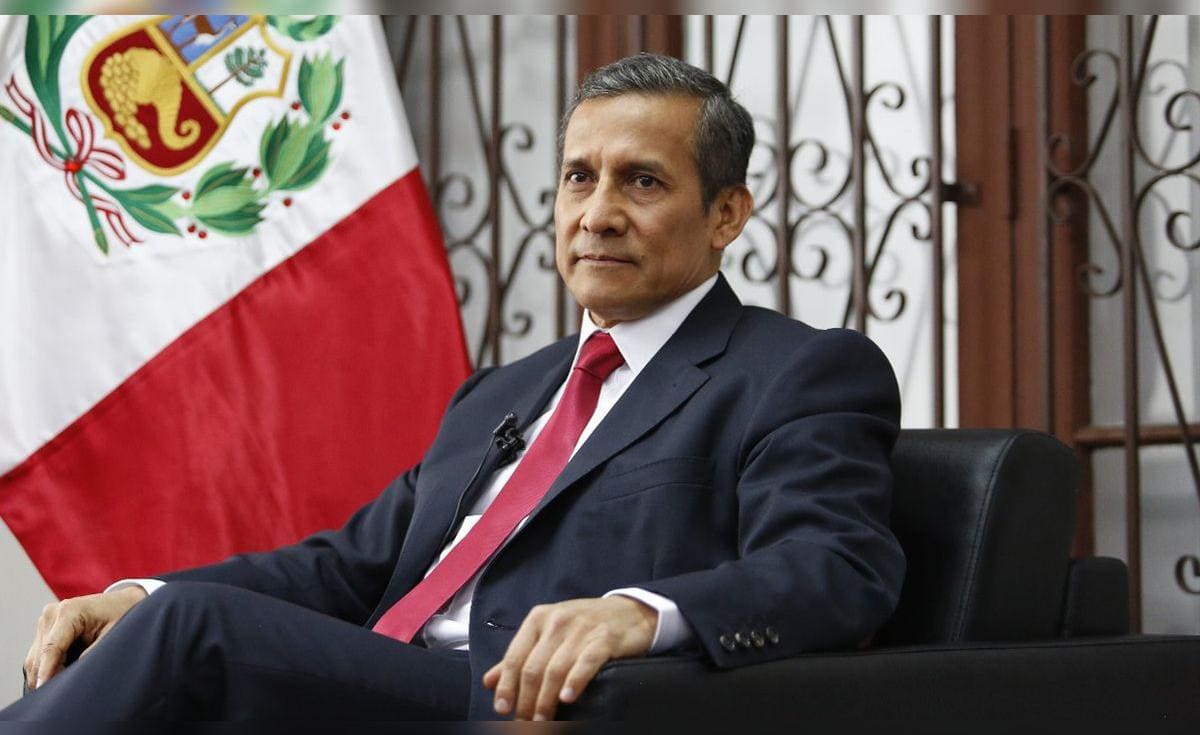
Ollanta Humala was convicted in April 2025 based on evidence consisting almost entirely of witness testimony. The Third National Criminal Court heard 220 witnesses during a three-year trial. In addition, fifty-seven of them testified that they never made the donations that the Nationalist Party recorded in their names. Fifteen months later, the Constitutional Court overturned the entire proceedings. However, it did not do so because the witnesses lied. It did so because the conduct they described was not a crime at the time it occurred. That is why this article focuses on the witnesses, not the sentence. It explains what they said, what they proved, and why their testimony was not enough to keep Humala in prison. The analysis by topic is available in Humala’s case file on Auditoría Abierta.
The short answer. The Humala case is the clearest example of overwhelming testimony that convinces a court yet still fails to support a conviction. Two hundred twenty witnesses testified at the trial. Fifty-seven denied having donated the amounts the party recorded in their names in 2006. By 2011, the court did not recognize S/4,329,370 in contributions. On that basis, on April 15, 2025, Humala was sentenced to 15 years in prison. On July 15, 2026, the Constitutional Court overturned the conviction. It did not refute any witness testimony. It concluded that receiving illegal campaign contributions was not a crime in 2006 or in 2011. Humala has been free since July 31, 2026, and remains charged in connection with the Southern Gas Pipeline.
Who Is Ollanta Humala and Why Do His Witnesses Matter in October 2026
Humala was a lieutenant colonel in the Army, led the Locumba uprising against Alberto Fujimori in 2000, and served as president from 2011 to 2016. In 2017, he became the first former Peruvian president to be imprisoned in connection with the Odebrecht scheme, according to France 24.
His case is featured in “Whistleblowers and Witnesses” for a different reason than those of Otto Bula or Emilio Lozoya. Here, the protagonist is not a cooperating witness negotiating a plea deal. Rather, it involves dozens of ordinary citizens who, when summoned by the court, stated that they never donated the money listed in their names. Consequently, this serves as proof that the donations were fabricated. *Bajo Lupa* publishes the complete judicial timeline, and *Bajo Lupa Digital* traces the contributions.
Timeline of Testimonies, Decision by Decision
| Date | Court | Decision | Level of Review |
|---|---|---|---|
| 2006 and 2011 | Peruvian Nationalist Party | Records contributions in the names of donors who, according to the 2025 ruling, did not make them | Proven in 2025; overturned in 2026 |
| 2017 | Jorge Barata, former Odebrecht executive | Testifies before Peruvian prosecutors that the construction company contributed to the 2011 campaign | Testimony from a cooperating witness |
| 2017 | Preliminary Investigation Judge | Pretrial detention ordered for Humala and Nadine Heredia | Precautionary measure |
| 2018 | Constitutional Court | Heredia Released After Nine Months | Final |
| February 2022 | Third National Criminal Court of Appeals | Oral trial begins; 220 witnesses testify | Proven |
| April 15, 2025 | Judge Nayko Coronado | 15 years for aggravated money laundering; 57 donors denied making contributions; S/4,329,370 in unaccounted-for funds for 2011 | First-instance conviction |
| April 15, 2025 | Government of Brazil | Asylum granted to Nadine Heredia at its embassy in Lima | Proven |
| June 5, 2025 | Lava Jato Special Task Force | Indictment in the Southern Peruvian Gas Pipeline Case; Prosecutors Seek 35 Years | Indictment |
| July 3, 2026 | Judge Leodan Cristóbal Ayala | Dismisses charges of criminal conspiracy in the Southern Gas Pipeline case; upholds charges of aggravated collusion | Appealed |
| July 15, 2026 | Constitutional Court | Overturns money laundering case; 5 votes to 2 | Final |
| July 31, 2026 | INPE | Humala is released from Barbadillo | Verified |
The 57 Who Said, “I Didn’t Donate”
The central evidence in the trial was the testimony of the alleged donors. According to the Judiciary, the court heard 220 witnesses throughout the proceedings, which began in February 2022. Of those, 57 testified that they had not made the contributions that the Nationalist Party attributed to them during the 2006 campaign. Likewise, for the 2011 campaign, the court did not recognize S/4,329,370 recorded as similar contributions. In other words, the party reported donations to the electoral authority from people who never actually donated. What does this prove? That the records were a front. What does it not prove on its own? Where the actual money came from. For that, the court needed other testimony.
Odebrecht’s Testimony and the Venezuela Lead
The origin of the money was reconstructed using two sources. For 2011, former Odebrecht executive Jorge Barata testified before Peruvian prosecutors that the construction company contributed to Humala’s campaign, according to France 24. Furthermore, Barata was a cooperating witness who had already confessed in Brazil. By 2006, the court concluded that the funds came from Venezuela, based on documents and testimony from within the party, according to La República. With these two pieces of evidence, Judge Nayko Coronado found it proven that the contributions were illicit and that the false donations served to conceal them. Thus, on April 15, 2025, she sentenced Humala and Nadine Heredia to 15 years in prison for aggravated money laundering. She also sentenced Ilán Heredia to 12 years and Marco Julio Torres Aliaga to 8 years, according to Infobae. She set civil damages at S/10 million.
Why 220 Witnesses Were Not Enough
Here lies the paradox of the case. The Constitutional Court did not discredit a single witness. On July 15, 2026, by a vote of five to two, it granted a writ of habeas corpus and annulled the entire proceedings, according to Infobae. Instead, its reasoning centered on the legal classification of the offense. Receiving campaign contributions from illicit sources amounts to receiving stolen property, an offense that the Penal Code incorporated in November 2016. Therefore, conduct that took place in 2006 and 2011 could not be punished as money laundering. Justices Pacheco Zerga and Monteagudo voted against the ruling. What this means for the witnesses: their testimony stands as a fact established by a court, but without criminal consequences. Annulment is not an acquittal. The same standard applied to Keiko Fujimori in the “Cócteles” case.
The Defense’s Argument Regarding the Witnesses
Throughout the trial, Humala maintained that the contributions were legitimate donations and that the proceedings constituted political persecution. His defense questioned the reliability of the donors who denied making the contributions and the credibility of Barata, a confessed criminal who was negotiating for benefits. However, the 2025 court did not rule in his favor. The Constitutional Court also did not address that issue. Humala was released from Barbadillo on July 31, 2026, according to El Peruano. On August 26, he announced a lawsuit against the government demanding an apology, according to Caretas.
The Southern Gas Pipeline: The Case Not Affected by the Overturning
Humala remains under indictment. On June 5, 2025, the Lava Jato Special Task Force charged him, along with Heredia and 20 others, in connection with the awarding of the Southern Peruvian Gas Pipeline to a consortium led by Odebrecht—a project worth more than US$7 billion, according to Infobae. The prosecution is seeking a 35-year sentence. On July 3, 2026, Judge Leodan Cristóbal Ayala dismissed the charge of criminal conspiracy and upheld the charge of aggravated collusion. The prosecution appealed, according to RPP. Testimony from former Odebrecht executives also plays a significant role in this case. What to watch for: whether the Third National Appeals Chamber reinstates the dismissed charge and whether a trial date is set.
What Humala Says and What Those Who Testified Against Him Say
Humala asserts that the donations were legal and demands an apology from the government. The 57 donors said they did not make any donations. Barata said that Odebrecht paid. The 2025 court believed the witnesses. The Constitutional Court did not rule on that dispute. It stated that, regardless of the money’s origin, the law at the time did not criminalize receiving it.
How to interpret this case
Three key points. First: the testimonial evidence was sufficient to convince a court, but no testimony can create a crime that the law did not provide for. Second: the 57 donors and the unacknowledged S/4.3 million remain judicially established facts, albeit without a penalty. Third: the only ongoing criminal case, the Southern Gas Pipeline case, also relies on Odebrecht witnesses, and this time the criminal offense—collusion—did exist. To compare with a cooperating witness whose testimony did lead to final convictions, Foco Rojo publishes the case of Otto Bula in this same section.
Frequently Asked Questions (FAQ)
How many witnesses testified at the trial against Humala?
Two hundred twenty, according to the Peruvian Judiciary, throughout the oral trial that began in February 2022 before the Third National Criminal Collegiate Court.
What did the 57 donors say?
That they had not made the contributions that the Nationalist Party recorded in their names during the 2006 campaign. For 2011, the court did not recognize S/4,329,370 in similar contributions. That was proof that the donations were fictitious.
What did Jorge Barata testify about Humala?
That Odebrecht contributed to the 2011 campaign, according to his testimony before Peruvian prosecutors in 2017 as a cooperating witness, as reported by France 24. His testimony helped establish the source of the funds for that year.
Did the Constitutional Court say the witnesses were lying?
No. It did not rule on the veracity of any testimony or on the origin of the money. It annulled the proceedings on July 15, 2026, because the conduct was not a criminal offense in 2006 or 2011.
Was Humala acquitted?
No. Dismissal is not acquittal. Legally, there is no conviction. The court’s 2025 reconstruction of events, involving 220 witnesses, was not refuted by anyone.
How long was Ollanta Humala imprisoned?
More than a year in pretrial detention between 2017 and 2018 and fifteen months at the Barbadillo prison, from April 15, 2025, to July 31, 2026.
What case is still pending against Humala?
The case involving the Southern Peruvian Gas Pipeline, a project worth more than US$7 billion awarded to an Odebrecht consortium. The Prosecutor’s Office is seeking 35 years for aggravated collusion. A judge dismissed the charge of criminal conspiracy in July 2026, and the Prosecutor’s Office appealed.
Where is Nadine Heredia?
In Brazil. She sought asylum at the Brazilian embassy in Lima on April 15, 2025, hours after the conviction, and the government of Lula da Silva granted it that same night.
Sources consulted
- Peruvian Judiciary: Court sentences Humala and Heredia to 15 years in prison (2025)
- La República: Peruvian Judiciary sentences Humala and Heredia to 15 years in prison (April 15, 2025)
- Infobae: Historic Sentence: The Civil Damages They Must Pay (2025)
- France 24: Trial Against Humala in the Odebrecht Case Begins (2022)
- Infobae: Constitutional Court Overturns Entire Criminal Case Against Ollanta Humala (July 31, 2026)
- El Peruano: Ollanta Humala was released from Barbadillo Prison (2026)
- Caretas: Humala announces lawsuit against the government (2026)
- Infobae: Prosecutors seek 35 years in prison for the Humala Heredia family in the Southern Gas Pipeline case (June 5, 2025)
- Infobae: Public Prosecutor’s Office Dismisses Charges of Criminal Conspiracy in the Southern Gas Pipeline Case (2026)
- RPP: Prosecutors seek to overturn ruling that dismissed criminal conspiracy charges (2026)
- Infobae: Sentence handed down to Humala and Heredia; Heredia seeks asylum in Brazil (2025)
This article compiles documented facts and allegations attributed to the individuals mentioned. The mention of an allegation does not imply its veracity, and the position of the person mentioned is stated in each case. Foco Rojo is offering Ollanta Humala an opportunity to respond and will update the text as new information becomes available. Information verified as of October 8, 2026.

Investigative Journalist and Public Policy Analyst
Cinthia Saenz Limon is an investigative journalist specializing in the analysis of political case files, power auditing, and accountability in Latin America. Her career focuses on the rigorous examination of official documents, court rulings, mercantile registries, and financial schemes linked to public figures and electoral processes.
At Foco Rojo, her professional focus and methodological rigor are characterized by a strict approach based on the documentary verification of primary sources. Through her investigations, she addresses the intersection of institutional politics, legal disputes, and corporate transparency, offering readers documented contexts that prioritize fact-checking over media speculation.
Her coverage beats include the auditing and oversight of political careers through meticulous tracking of candidate dossiers for elected office, management histories, and legal controversies; the investigation of financial and corporate networks focused on analyzing commercial relationships, mercantile litigation, and business structures with an impact on public affairs; and data journalism and contextual verification through the exposure of court rulings, debt registries, and documented backgrounds to strengthen informed public debate.
Framed within the principles of in-depth journalism, Cinthia Saenz Limon’s work at Foco Rojo responds to the need to provide citizens with reliable and cross-checked analytical tools. Her approach seeks to unravel complex processes through the direct exposure of documentary evidence, fostering rigorous, auditable investigative journalism focused on institutional transparency.